
Extra Eyes: using computer vision to enhance dolphin health in the Potomac River
/Ask an Expert: Colin Murphy, Potomac-Chesapeake Dolphin Project
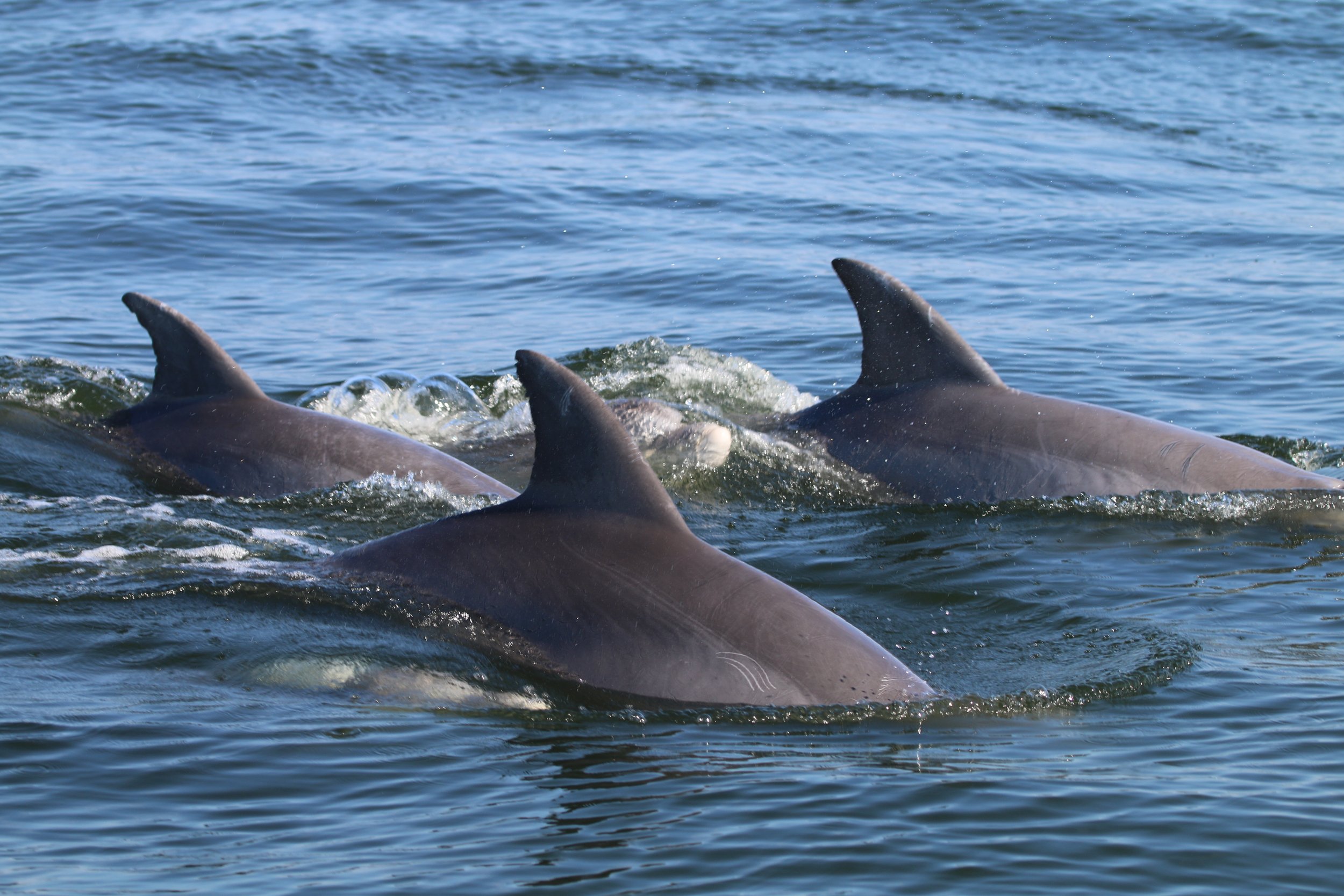
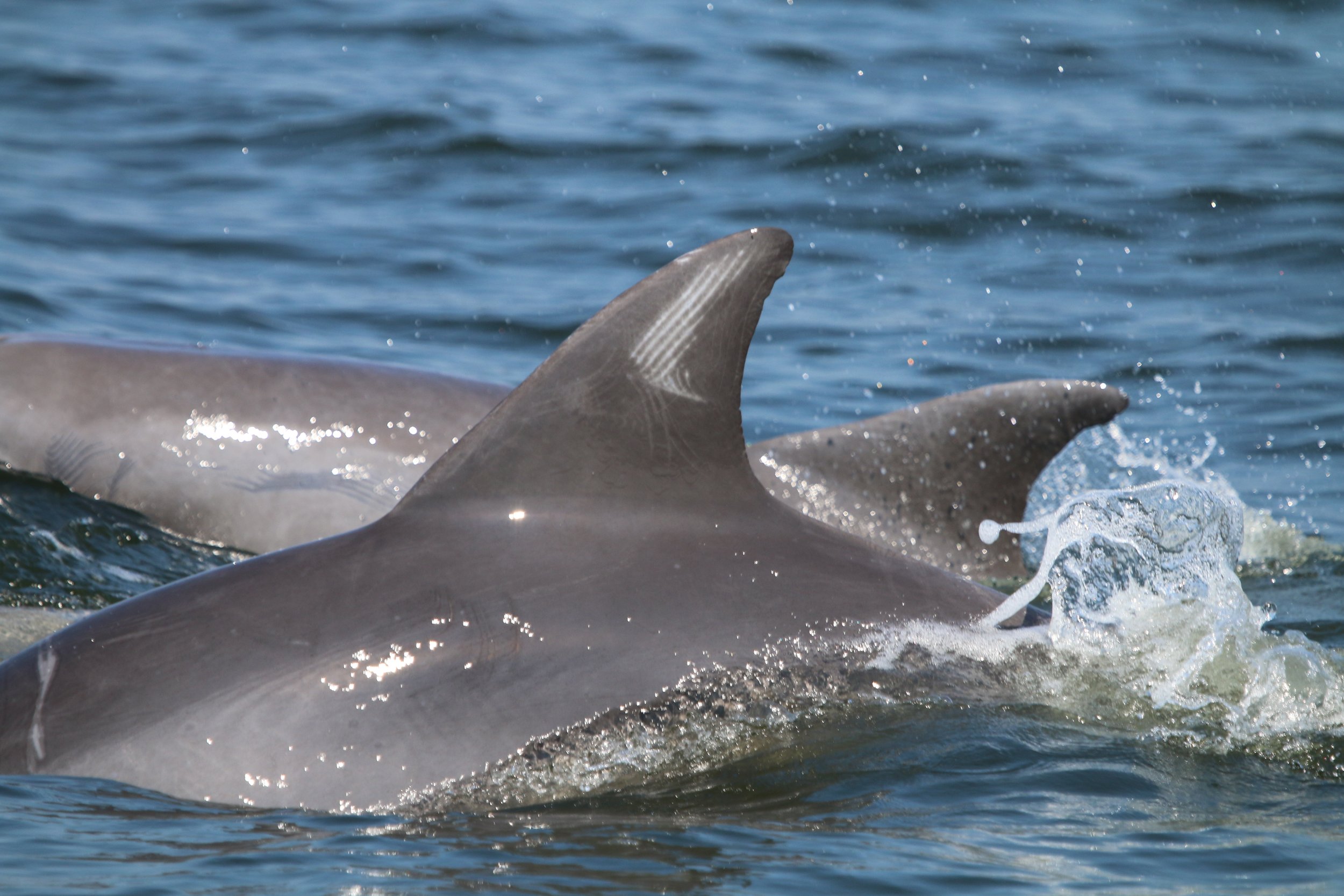
Every PCDP photograph tells a story. The unique dorsal fins we capture tell us who's there, and their size and skin conditions can tell us even more about them. Photograph provided by the Potomac-Chesapeake Dolphin Project, taken under NMFS permit no. 19403

Colin Murphy
Colin Murphy was a student at the College of William and Mary, studying Biology and Marine Science. He joined the PCDP as a research assistant through the Bansal Lab at Georgetown and is interested in applying new technologies to wildlife disease surveillance.
When Dr. Janet Mann started the Potomac-Chesapeake Dolphin Project (PCDP) in 2015, we never imagined that more than 2,000 dolphins would call the Potomac home, nor how much we’d learn about them. An important part of our research is photographing dolphins so that we can identify individuals and assess their age, sex, and even health. We’ve amassed an impressive 170,000 photographs, but this wealth of data presents a huge challenge to our small research team.
When I first joined the project in 2020, it had been running for five years, already with more than 30,000 photographs. Each of these photos needs to be carefully examined to glean information about the dolphins, consuming thousands of hours. As a result, we are often still analyzing past years’ photos when it’s time to collect more. This data backlog challenges our ability to answer critical questions about the dolphins in real time. For instance, are they healthy or stressed? What might be affecting their health?
What photographs can tell us about dolphin health
In our latest study, we chose to focus on two indicators of dolphin health that can be captured in photographs: skin lesions and tooth rakes.
Skin lesions are most commonly seen as discolored spots or splotches on a dolphin’s skin, and generally indicate disease or a weakened immune system. They come in many different shapes and sizes, are found on dolphins worldwide, and are associated with sickness from things like pollution, red tides, or disease.
Tooth rakes are scars caused by interactions with other dolphins which reveal vulnerability. Heavy scarring may indicate stress from receiving repeated attacks. Given that dolphins have high levels of physical contact with others that weaken their skin barriers, high scarring likely increases the risk of disease.
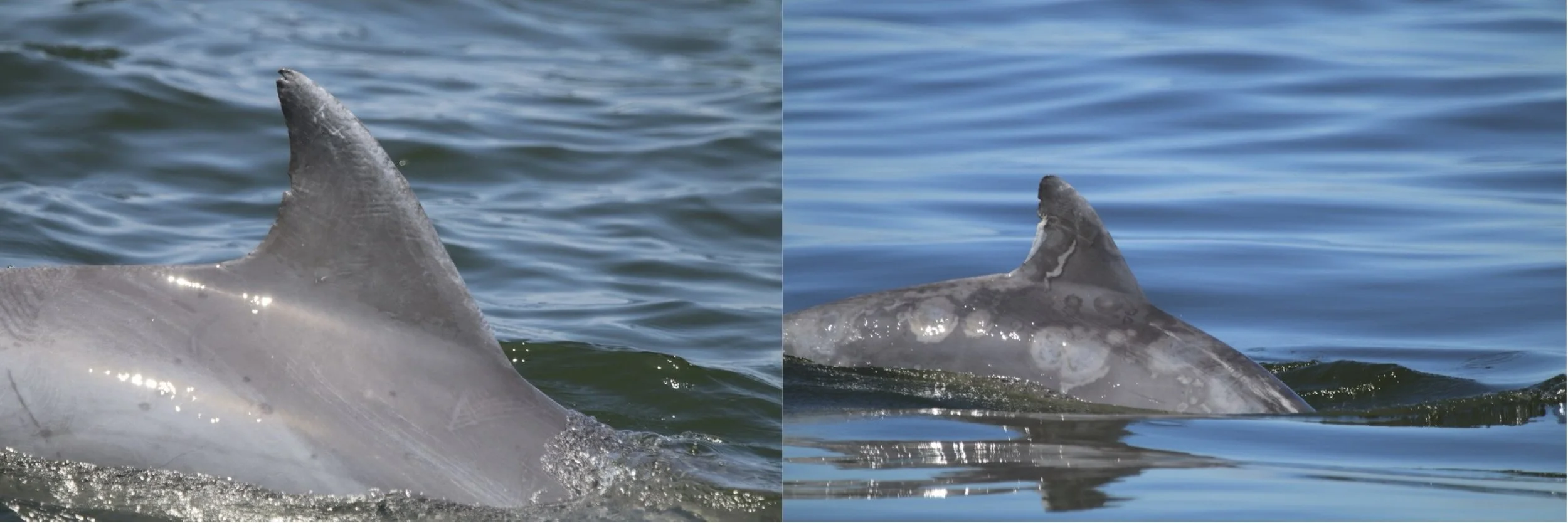
Skin lesions can vary in their severity. They typically present either as small spots (see left), or as large areas of discoloration or damage (see right). Photographs provided by the Potomac-Chesapeake Dolphin Project, taken under NMFS permit no. 23782
But how do we begin to work through all of our photographic data?
Tooth rakes present as regions of parallel scarring, such as those seen here on this dolphin's dorsal fin. They are caused by other dolphins during play or aggression. Photograph provided by the Potomac-Chesapeake Dolphin Project, taken under NMFS permit no. 23782
Our research aims to make searching photographs for skin lesions and tooth rakes more efficient for real-time health monitoring by using machine learning. We trained a computer to “look” through our images and predict where it sees a skin lesion or a tooth rake, significantly reducing our data processing time. Thus, we have overcome some of our analysis challenges to bring you some fascinating updates regarding the health of our dolphins.
How many dolphins are lesioned?
We found that most of our dolphins (more than 80%) have at least one skin lesion. This might suggest that our dolphins are facing unusually high environmental stress or disease. The good news is that we haven’t seen any major mortality events in the bay since 2015, but we’ll be interested to see if we can find any patterns with skin lesions over time as our project continues to grow.
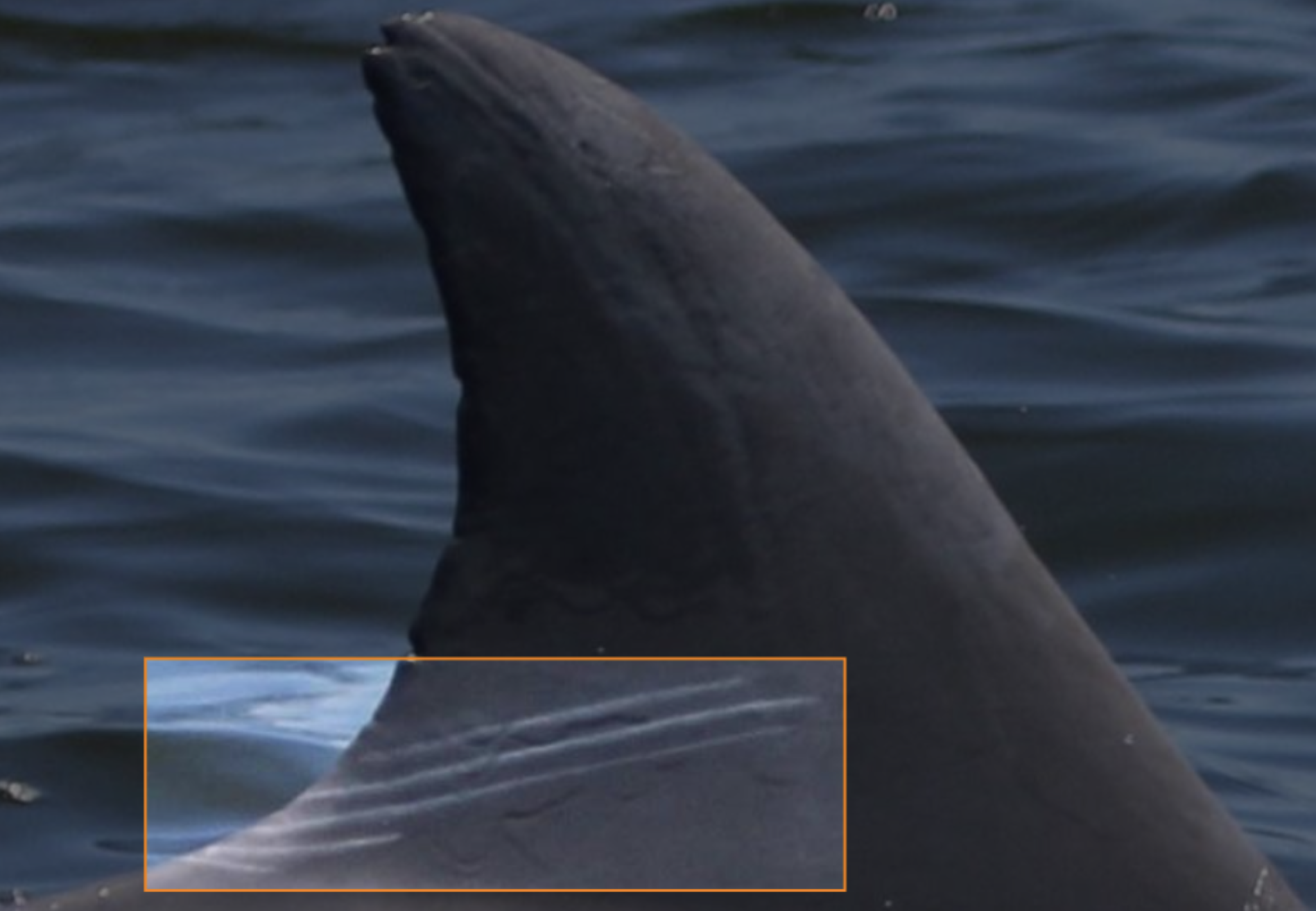
Our computer vision model can identify both tooth rakes (as pictured here) and lesions from a photograph in under a second, saving us from having to look for them ourselves, in our more than 100,000 photographs! Photograph is a model output from the Roboflow computer vision platform, and the dorsal fin photograph was provided by the Potomac Chesapeake Dolphin Project and taken under NMFS Permit no. 23782.
When are dolphins most likely to be lesioned?
In our brand new paper, we found that most lesions are more common in colder, fresher water, suggesting dolphins might be more vulnerable in these conditions. This will be important to consider as climate change continues to increase the frequency of storms and alter the temperature and saltiness of the Potomac. How might these dolphins’ health also be affected?
How are tooth rakes and skin lesions connected?
We also discovered that dolphins that had a lot of tooth rakes were more likely to also have skin lesions. This means that dolphins with more tooth rakes, such as adult males and dolphin “teenagers,” might be at a higher risk of disease — supporting work we’ve talked about in the past and also recently published on!
Providing policy makers and the community with timely updates on dolphin health: What can you do to help?
Our machine learning tools allow us to quickly catch changes to population health that may be tied to human activity by actively assessing skin lesion and tooth rake trends. We are dedicated to using our research to inform conservation efforts for these important animals,and to do this, we need to be able to move quickly.
Some previous work by our team shows that human disturbance in our waterways mayexacerbate disease spread in dolphins. Polluted waters, harassment from humans, and interactions with fisheries can make dolphins more susceptible to disease and less likely to fight off infections.
📢 BECOME A STEWARD: Advocating for improved, climate-friendly infrastructure to mitigate polluted runoff and reducing waste are two ways you can make a difference.
🧤 GET INVOLVED: Work with the Potomac Conservancy and other local environmental groups who are taking direct actions to reduce water pollution.
➡️ KEEP YOUR DISTANCE: For those who recreate in the Potomac, maintaining a safe distance of at least 50 yards from dolphins is key to reducing stress and avoiding accidental injury.
📲 REPORT SIGHTINGS: It is important to identify disease early on. If you see a dead dolphin while out on the Potomac, please report it to the Virginia stranding hotline at (757) 385-7575 or the Maryland stranding hotline at 800-628-9944. You can also report your sightings of live dolphins to the Potomac-Chesapeake Dolphin Project and on the Chesapeake Bay Dolphin Watch app!
💙 FUND THE RESEARCH: Lastly, this work is costly and donations are immensely helpful in covering the costs associated with data collection. If you would like to donate to the Potomac-Chesapeake Dolphin Project, please visit our donation page through Georgetown University.




Something sinister is hiding in the forests of the Potomac River region, where invasive pests and disease are quietly killing native hemlock, beech, and ash trees. Their disappearance threatens more than the fall landscape, weakening forests that help prevent erosion, absorb polluted runoff, and protect the Potomac River. This spooky season, learn what is haunting our trees and how you can help protect the forests that keep our river clean.