
New report: The Potomac River is named the “Most Endangered River" in the United States
/Data center sprawl is slowly draining the Potomac River region’s resources
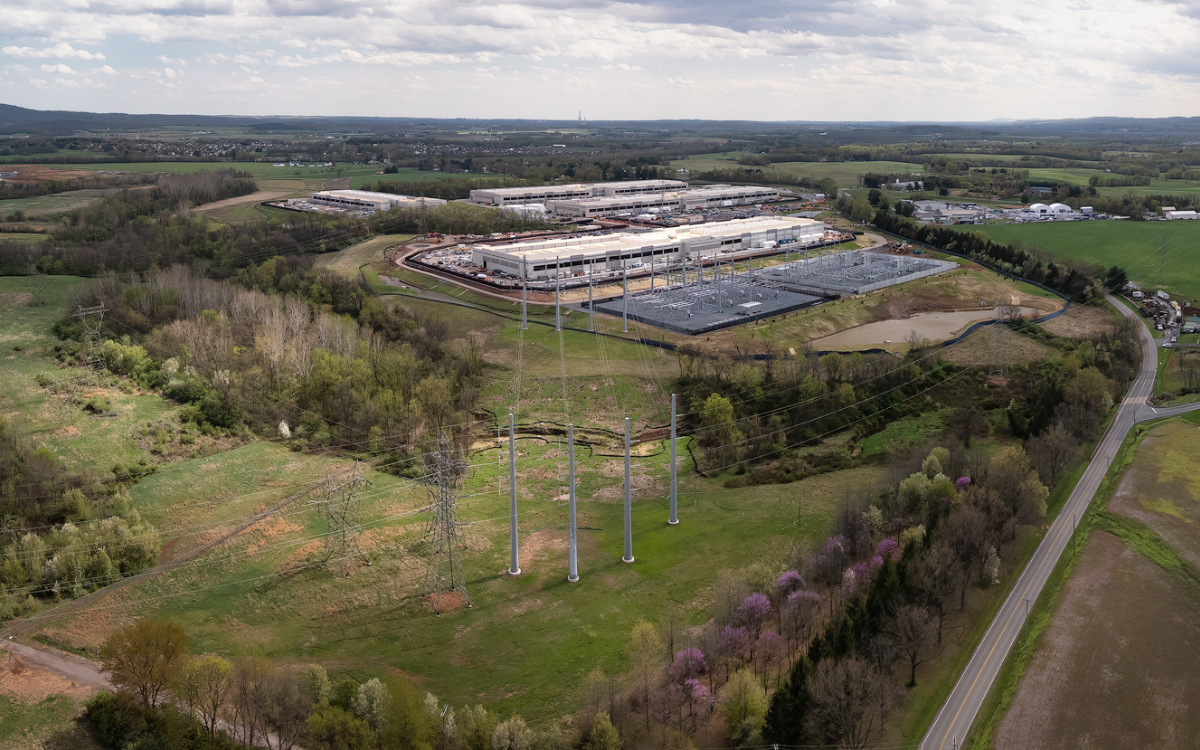
A data center in Fredrick, maryland
After decades of progress, the Potomac River’s recovery is stalling, and growing pressures are pushing it toward a tipping point.
Now, a new report from American Rivers confirms what we have feared: The Potomac has been named the #1 Most Endangered River in the country.
The report sounds the alarm on rapid data center sprawl in our region and the increasing strains it’s putting on water usage from the river and local waterways. In fact, the Potomac River, our region’s primary source of drinking water, is home to the densest concentration of data centers in the world with over 290 data centers in operation and hundreds of more planned.
Read on to learn why this issue is uniquely impacting the Potomac watershed, or pause and join Potomac Conservancy in demanding local leaders commit to responsible planning that prioritizes our waters and community health:
Worried about data centers?
Tell your local leaders to protect our waters, forests, and communities!
Why data centers pose a unique threat to the Potomac River
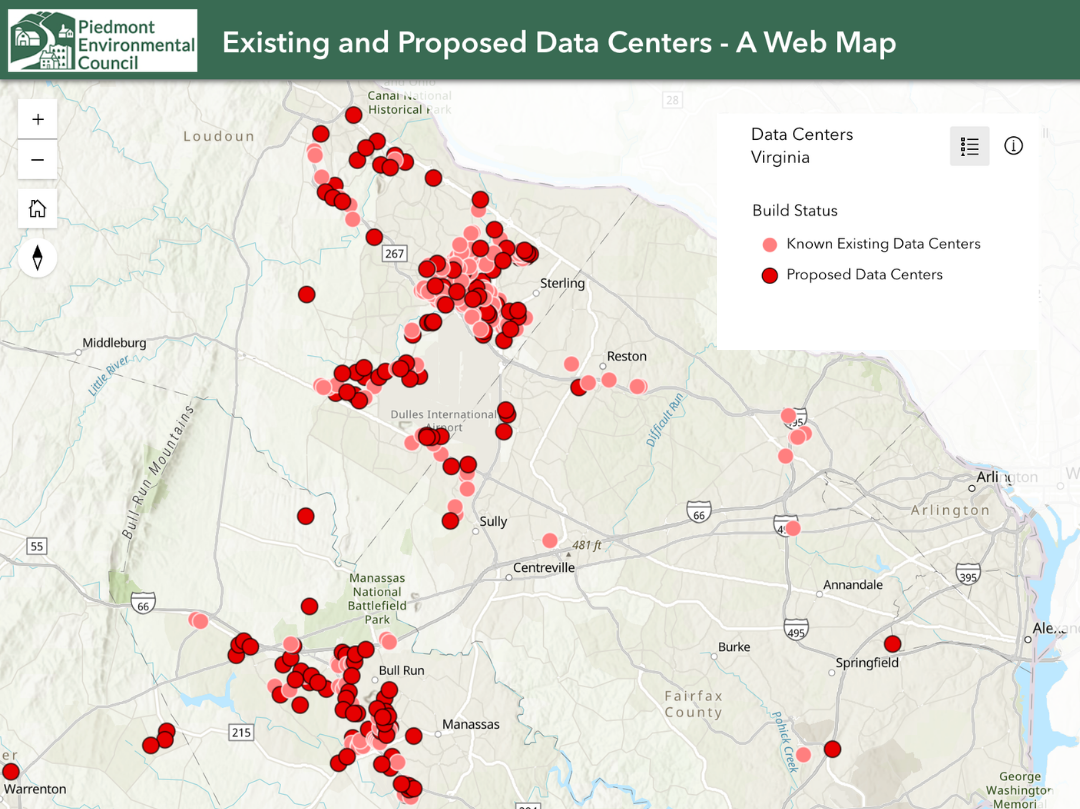
Map credit: Piedmont Environmental COuncil
Small impacts, scaled up
Data centers are not typical development projects due to their regional scale and local approval process. That means this issue isn’t about a single project, but the cumulative impact of clustering hundreds and hundreds of these facilities in our region.
Loudoun County, VA alone has 200 data centers built and 117 in the development pipeline (as of October 2025). At this scale, small impacts don’t stay small, they escalate to a degree we’ve never seen before.
Unsustainable water usage
Each data center requires large volumes of water for cooling their storage equipment. And their water demands for cooling spike at the worst possible time – summer. Data facilities require a large volume of water for cooling for their cloud storage equipment, and that demand is at its highest during the summer when river levels are lowest. This pattern has water utilities worried about future water scarcity concerns.
Currently, data centers make up 1% of water users but are already consuming 9% annually, and 12% in the summer, of all water withdrawn from the Potomac River. In the coming decades, local data centers could draw 200 million gallons of water a day, nearly as much as the Tidal Basin in DC holds.
Sprawling into our preserved land
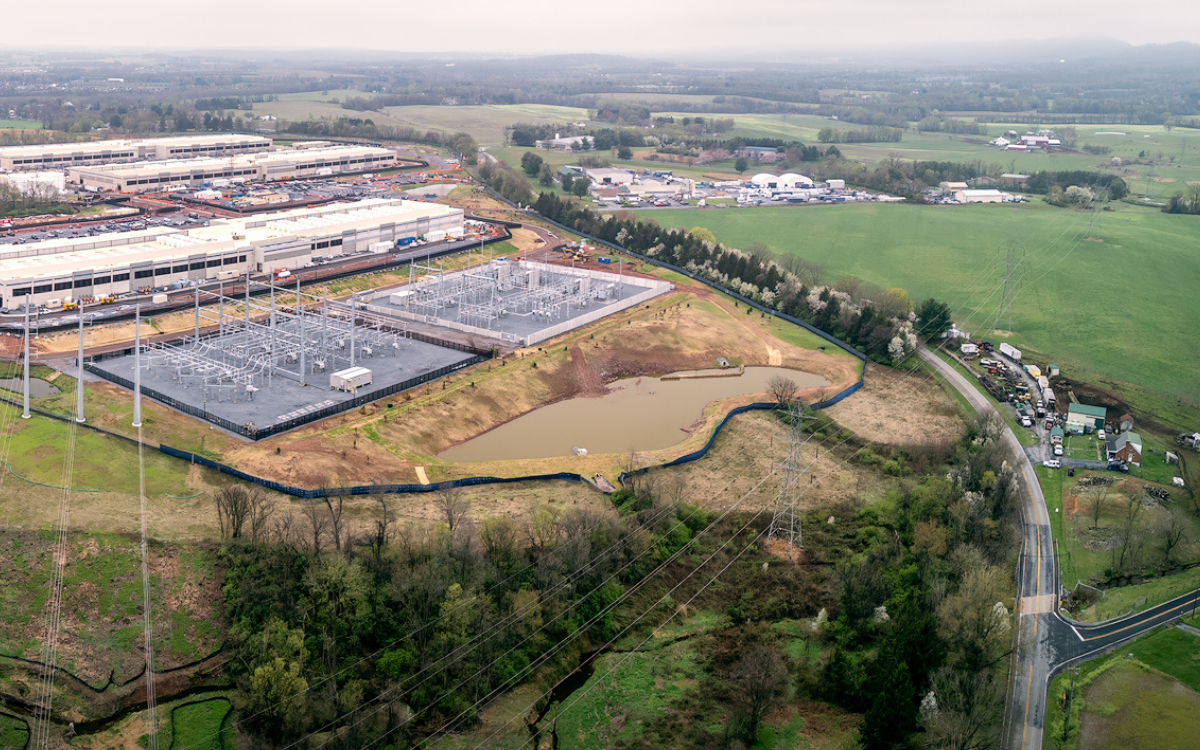
Data Center in Fredrick County, MD
Data centers aren’t just consuming large quantities of water, they’re encroaching into agricultural farmland, forests, and parkland. We’re seeing millions of square miles convert to buildings and powerline corridors, putting our streams and drinking water sources at risk.
The Potomac River’s health depends on the lands that surround it. When we lose forests and natural lands to unchecked sprawl, we’re losing the river’s first line of defense against polluted runoff, the fastest-growing source of pollution to our waters.
Lack of transparency and research
Local governments intentionally keeping water usage information behind closed doors has been one of the biggest hurdles to safeguarding our waters from data center development. Communities are being denied details while public officials make long-term zoning decisions that impact our drinking water, streams, and public health.
Approved at the local and county levels, data centers’ water usage has been difficult to track due to the common use of non-disclosure agreements (NDAs) agreed on by the companies and public officials.
Public trust has been further eroded by moves to stall or avoid environmental studies, including a controversial decision by Gov. Moore last year to veto a bipartisan bill that funded impact studies.
Harming our communities
At the heart of this issue is our local community. Our day-to-day life is impacted as soon as construction starts for data centers. They often increase noise and air pollution in nearby neighborhoods. They can also strain local water and energy supplies, leading to higher utility costs or reduced resources while offering few direct economic benefits in return.
In the news: Here a few examples of how new data center building is impacting local communities:

Why the Potomac River region is a global data center hub
Northern Virginia is at the top of the data center market in the country. There are a few reasons why this part of the Potomac River region is attractive to the tech industry.
Data centers rely on available land, water, and electricity, and all three can be found in our region at relative affordable pricing. There is also a dense fiber optics networks in the DMV that supports the federal government and government contractors, and county governments have provided economic incentives to build here. Finally, our region’s weather, even with extreme changes from the climate crisis, is ideal for data center facilities. We have chilly winters and temperatures that don't compete with the southern states’ heat.
Combining these factors gives data centers the perfect region to build and grow.
This is bigger than data centers. Our river is stressed OUT.
We can’t keep adding stress to the Potomac River and expect it to thrive.
In our 2025 Potomac River Report Card, we’ve tracked the Potomac’s remarkable comeback from a dismal “D” to a “B” health grade, however, progress is stalling. Over the last decade, the river has not made significant improvement and emerging threats are making it difficult to reach an “A” when our communities can enjoy swimmable, fishable waters. Rapid data center growth is stacking on stress to our already vulnerable local ecosystem. Our river is facing growing threats from:
Polluted urban runoff
Deforestation and sprawl
Extreme droughts and flash flooding fueled by climate change
Aging infrastructure failures like this winter’s massive sewage spill
Help us take the fight local – where it counts!
Potomac Conservancy has been leading the Potomac’s recovery for over thirty years through our local conservation and advocacy initiatives.
We’re not going to let data center sprawl or any other threat undo decades of hard-fought progress. Right now, data center plans are not just any other construction project, they are threatening our conservation easements, 15,000+ acres of healthy forests and streams that we permanently protected and steward!
That’s why our policy teams in Maryland and Virginia have been on the ground leading this fight:
Advocated for bill SB553 in Virginia, which requires monthly reporting requirements for water use by data centers
Joined the newly created Maryland Coalition for Data Center Reform
Supported bill HB1411 in Maryland, which called for greater transparency by requiring local governments to create approval processes for new data centers that would include public notice and public input
Activated our movement to support an override of Governor Moore’s veto of a bill that would study the economic and environmental impacts of data centers in Maryland
Take Action: Tell your leaders to put our communities first!
On behalf of our 42,000 supporters, we’re demanding smarter, transparent planning that protects our clean water, our communities, and our future. We’re demanding decision-makers:
Safeguard our waters, forests, and protected lands
Require full transparency and impact studies
Ensure community input
Adopt responsible planning that supports growth and community health
Speak up today and help us ensure our water, forests, and communities are top priorities in local planning!



Something sinister is hiding in the forests of the Potomac River region, where invasive pests and disease are quietly killing native hemlock, beech, and ash trees. Their disappearance threatens more than the fall landscape, weakening forests that help prevent erosion, absorb polluted runoff, and protect the Potomac River. This spooky season, learn what is haunting our trees and how you can help protect the forests that keep our river clean.