
When “extreme” becomes the new normal: How flood and drought cycles are changing the Potomac River region
/From too much to not enough, the Potomac’s ‘Goldilocks problem’ is keeping our communities high and dry or underwater.
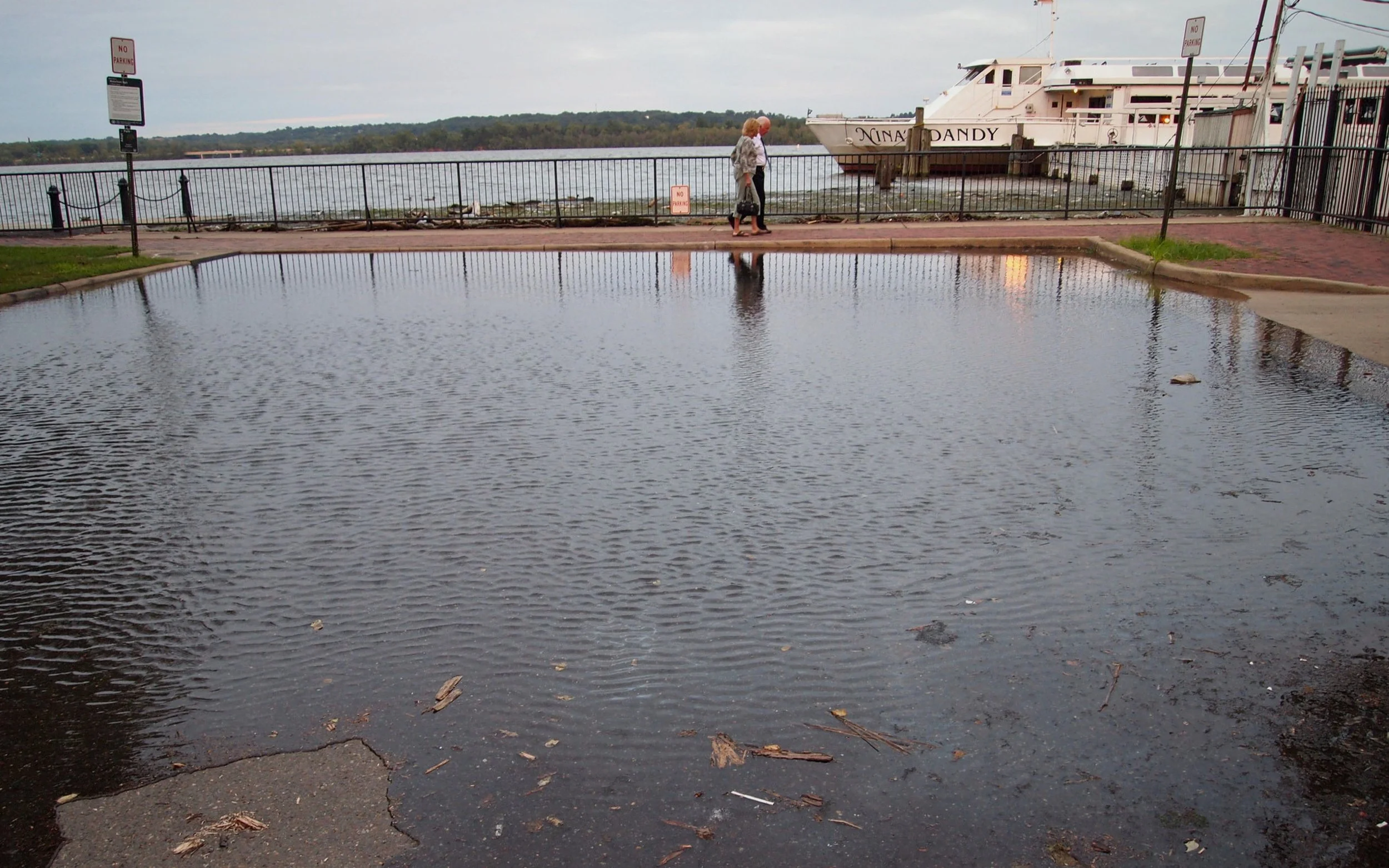
Extreme precipitation events are becoming increasingly common in the Potomac River region, putting coastal communities at risk. (Photo of Flooding in Old Town Alexandria, VA by Thomas Cizauskas, CC BY-NC-ND 2.0)
Summer is just around the corner, bringing with it longer days for picnics, shady streamside hikes, sunset paddles… and, if you’re a river advocate like us, getting to know some friendly faces at cleanups. But the change of seasons also highlights how erratic precipitation patterns in our region have become: Hotter, drier days are taxing an already overburdened water supply, while intense downpours accelerate erosion that puts everything from the quality of our drinking water to the safety of our infrastructure at risk.
The new normal of “predictably unpredictable” summer weather is more than just an inconvenience for your weekend plans. As extreme conditions become more frequent, it’s harder for Potomac River communities to recover—especially while contending with compounding crises like those we’ve already faced this year.
To anticipate what’s ahead for our region this summer, let’s take a quick step back in time.
Feeling the heat: Last year’s historic highs and lows
For many residents of the DMV, the summer of 2025 felt like a breaking point for extreme weather. Around the region, daily temperatures regularly shattered record highs while news stations and social media feeds alike broadcasted images of familiar roadways deluged with floodwater. Acute rainfall events in Maryland and Virginia caused emergency conditions that put hundreds of Potomac River region residents’ lives in jeopardy.
But intense flash flooding is only part of the story—both the presence and absence of rain are causing serious distortions in our seasonal weather patterns.
What we don’t see: How droughts worsen the effects of excess rainfall
Contrary to what you might expect, every extreme flooding event that hits our region begins with extreme dryness.
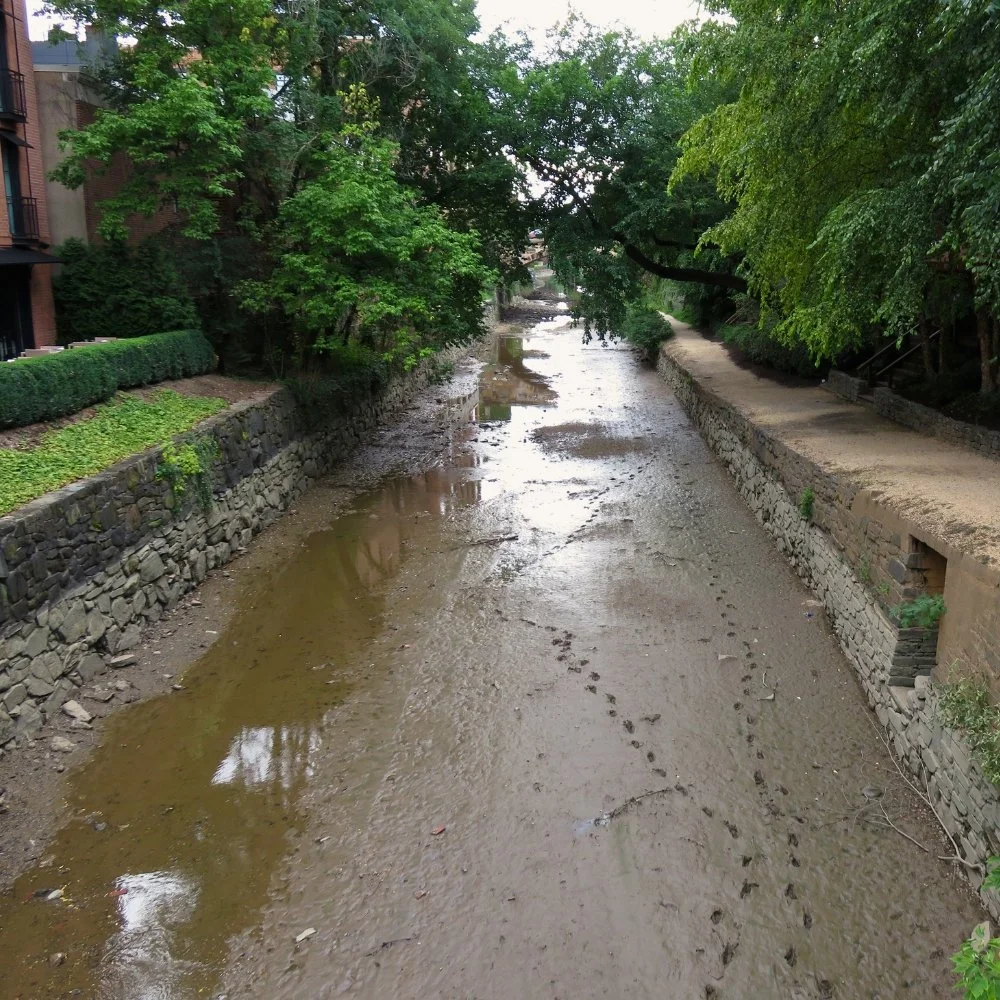
Low water levels in the C&O Canal near georgetown suggest the presence of drought conditions in the region. (Image source: Canva)
Prolonged droughts like the one we’re experiencing this year wreak havoc on soil, stripping it of nutrients needed to sustain plant life and weakening critical riparian buffers. Unhealthy soil can also become compacted, making it less capable of absorbing water. And as rivers and streams become depleted, sediment buildup reduces their carrying capacity—all increasing the likelihood of polluted urban runoff, the only growing source of pollution in the Potomac River, making its way into our drinking water.
Droughts aren’t just the stuff of summer’s dog days. Much of the Potomac River region weathered Moderate to Severe drought conditions through the winter of 2025. But hotter summers do intensify these issues: New research shows that climbing temperatures increase the amount of moisture in the air and worsen droughts.
What we do see: Floods in the Potomac River region are intensifying
If you’ve ever wondered why the weather has seemed so weird lately while waiting for a sudden sheet of rain that could destroy your windshield wipers to pass, you’re not just imagining things. Rainfall events in our region are both less frequent and far more intense than they once were. On average, a greater volume of moisture is in the air… and when humid areas collide with cold fronts, flash floods may result.
Historically, D.C. has received just shy of 4” of rain during the month of May. But during the catastrophic flooding that struck Westernport, Maryland last May, some areas received 5” of rain in a matter of hours. Near Cumberland, Maryland, the Potomac’s North Branch rose by 20 feet in less than 18 hours.
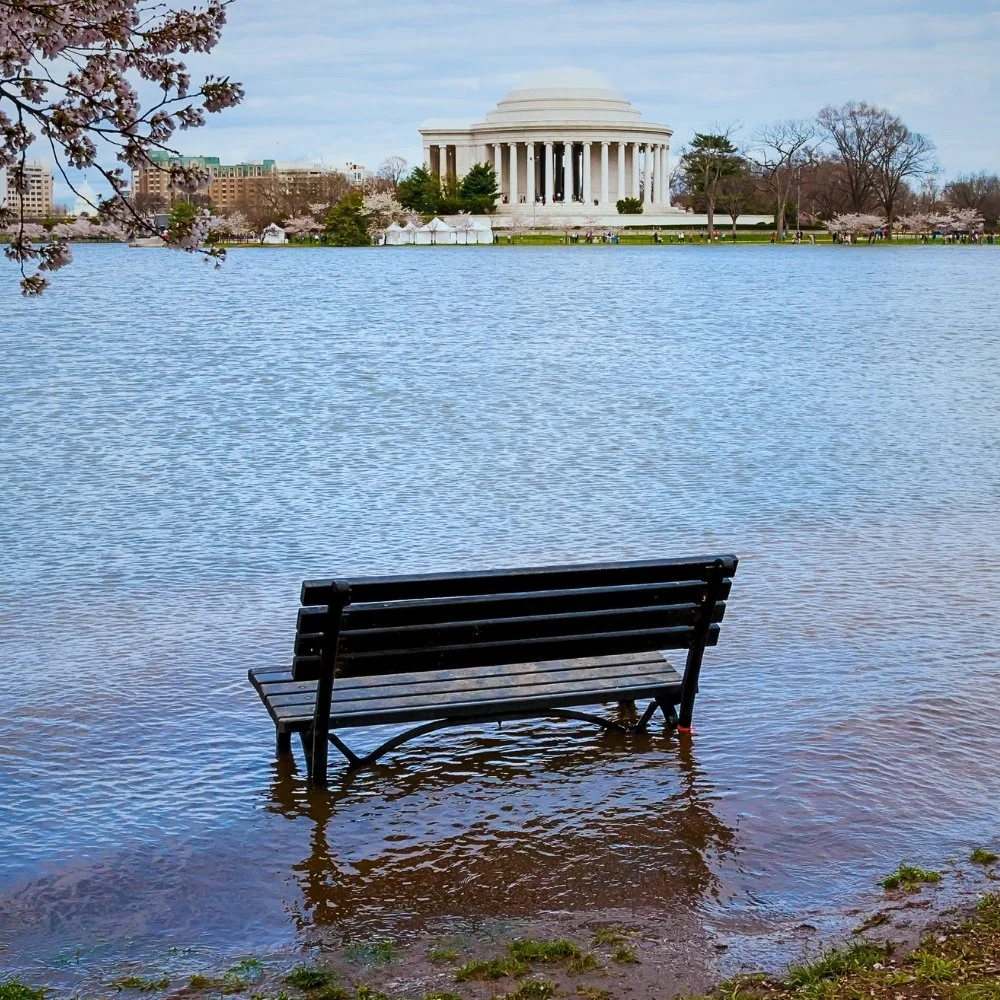
Flooding has been an ongoing issue for D.C.’s Tidal Basin, which has suffered from both sinking ground and extreme precipitation events. A two-year seawall reconstruction project to protect the Tidal Basin completed construction in the spring of 2026. (Image source: Canva)
Who will bear the brunt of these impacts?
Lower-income and historically disadvantaged communities.
Over 90% of single-family homes in D.C.’s 7th and 8th wards—where the median income is less than half of the District’s median on the whole—are located in FEMA-designated flood hazard zones, as reported by Hola Cultura.
Communities built on the shores of the Potomac.
According to First Street, a comprehensive climate risk modeling tool, nearly 18% of properties in D.C. are at risk of flooding within the next 30 years. Across the Potomac in Alexandria, VA, the estimated percentage jumps to over 25%. And a staggering 31.5% of properties in Shepherdstown, WV are expected to become severely threatened by flood risk over the next few decades.
Wildlife that depends on a stable climate.
Locally critical species like brook trout are highly sensitive to changes in water temperature, health, and volume.
We can’t reverse the drought-to-downpour cycle… but we can take action to protect our neighbors and wildlife.
This dangerous cycle isn’t going away. Lengthening droughts and soaring humidity will continue to cause flooding events that grow more common and more devastating as time goes on, requiring us to shift our perspective from impact prevention to defense and mitigation.
The good news: Local and regional measures are already underway to help the Potomac region weather the storm.
Long-needed infrastructure improvements like the Potomac River Tunnel Project will decrease the number of harmful sewage overflow incidents caused by flash flooding.
Shoreline communities like Alexandria are taking climate impacts seriously and launching more robust resilience plans to protect their residents.
Environmental groups like Potomac Conservancy continue to advance nature-based flooding solutions like restoring shoreline buffers along our rivers and streams.
Rain or shine, drought or flood, we’ll keep working to protect our lands and waters—and we can always use more helping hands. Join us at an upcoming cleanup, become a volunteer leader, or support us as a monthly sustainer. However you pitch in, you’re making a real difference for our communities and wild spaces.
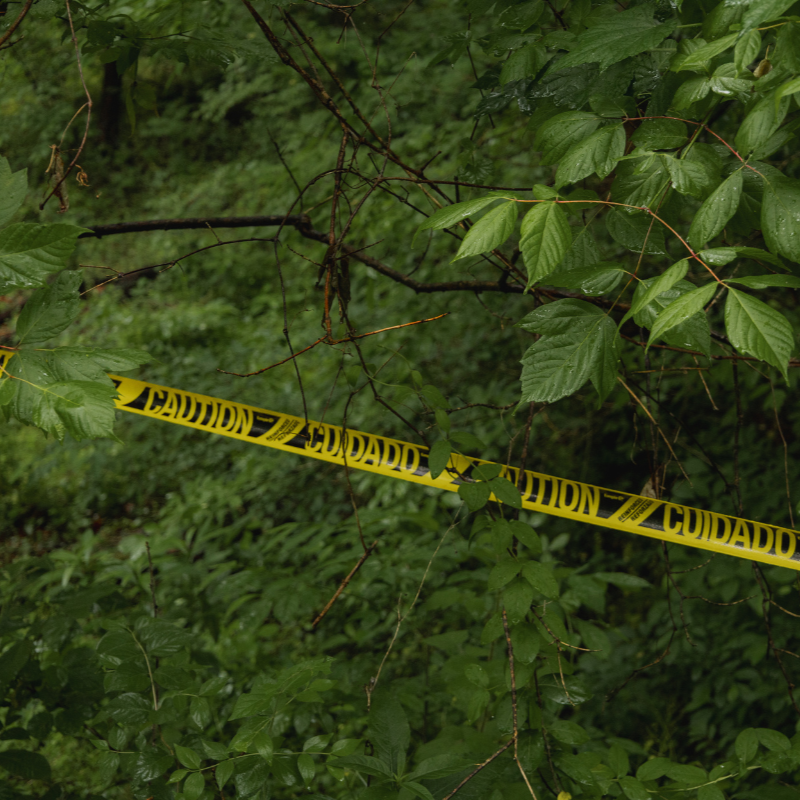
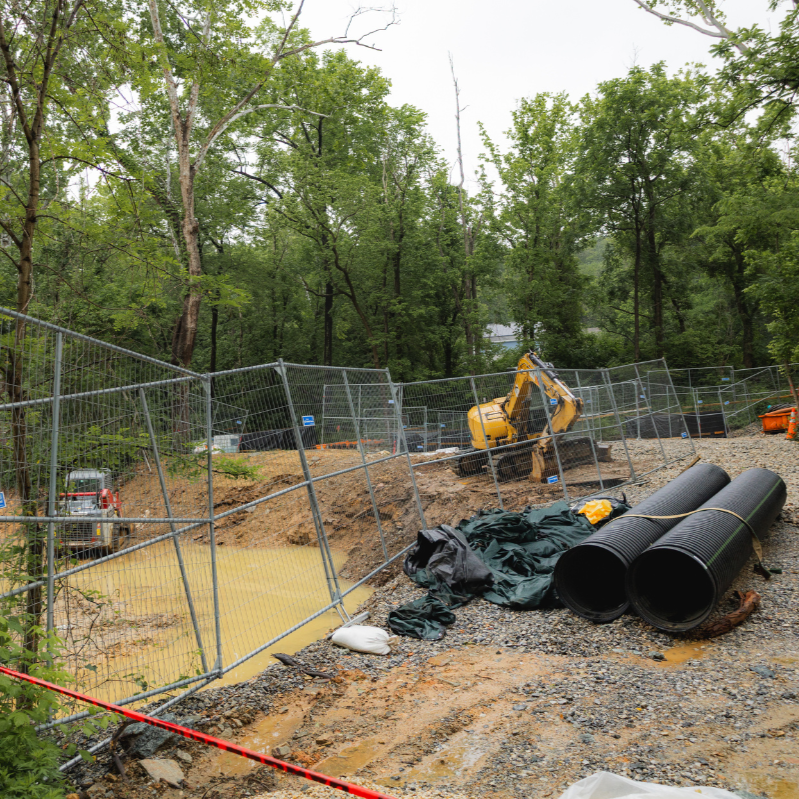


What you need to know about the January 2026 Potomac Interceptor sewage spill and how you can demand accountability and action.