
How these 5 Potomac River Region bridges connect communities and our favorite natural spaces
/These river crossings have shaped the rich history of the Potomac River region
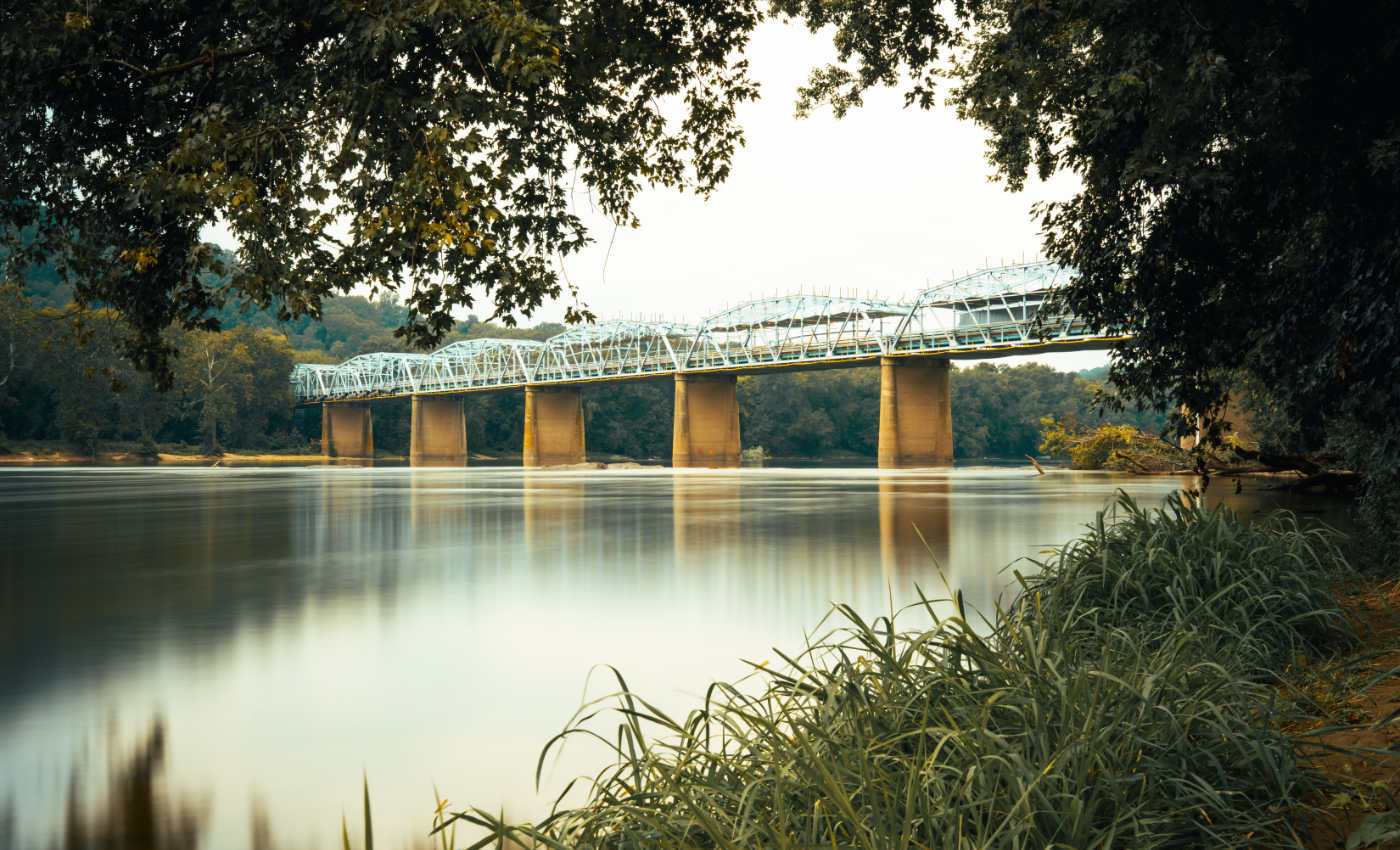
Point of Rocks bridge in Maryland. Photo credit: Luca crudeli
Building a bridge can be transformative. Bridges have been vital to the Potomac River region for centuries, providing an integral connection for commerce, linking agricultural regions with major ports, and regional transportation routes. While driving across most of the bridges in our region takes just a few seconds (without traffic, of course), these innovative structures are suffused with decades of history while connecting us with each other and our favorite natural places
Here are five bridges in the Potomac River region worth exploring or appreciating more:
Francis Scott Key Memorial Bridge, Washington DC
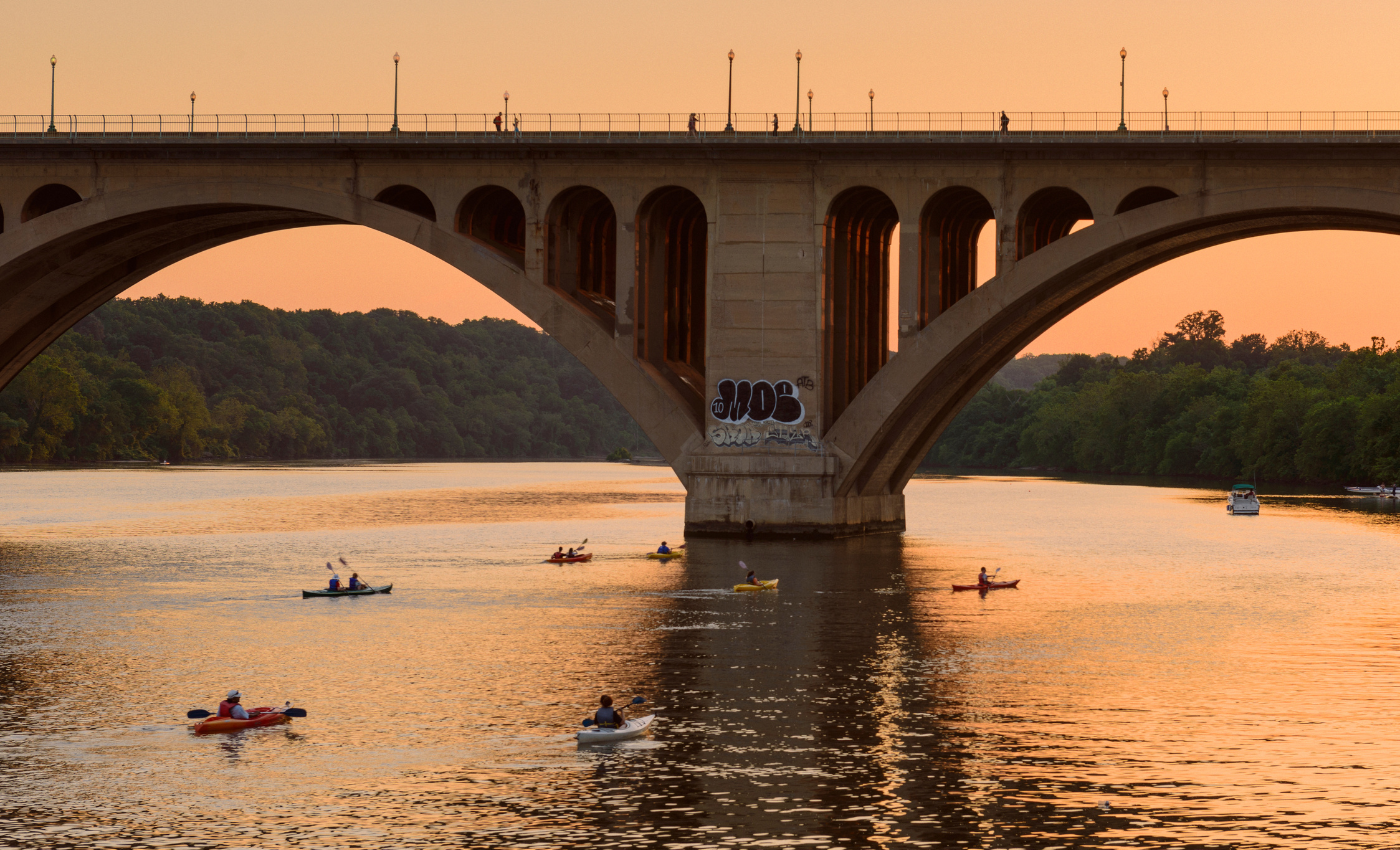
Key bridge in Georgetown dc at sunset
The oldest continuously used bridge in Washington, DC, the Francis Scott Key Memorial Bridge was completed in 1924. The arch-style bridge connects Rosslyn, Virginia, with Washington, DC’s Georgetown neighborhood, and was named in honor of Francis Scott Key, the Maryland native credited with penning The Star-Spangled Banner. Key’s former home was once located not far from the northern end of the bridge. The six-lane bridge offers views of Theodore Roosevelt Island and upstream views of the Three Sisters, a cluster of rocky islands that was once an important landmark for ships navigating the river. The towpath turned recreational trail at the heart of the Chesapeake and Ohio Canal National Historical Park runs beneath the bridge, paralleling the Potomac River for more than 180 miles, all the way to Cumberland, Maryland.
Plus, our annual Potomac Paddle-Off with Adventures Unbound is held at the Thompson Boat Center, located below the historic bridge.
American Legion Memorial Bridge, Virginia
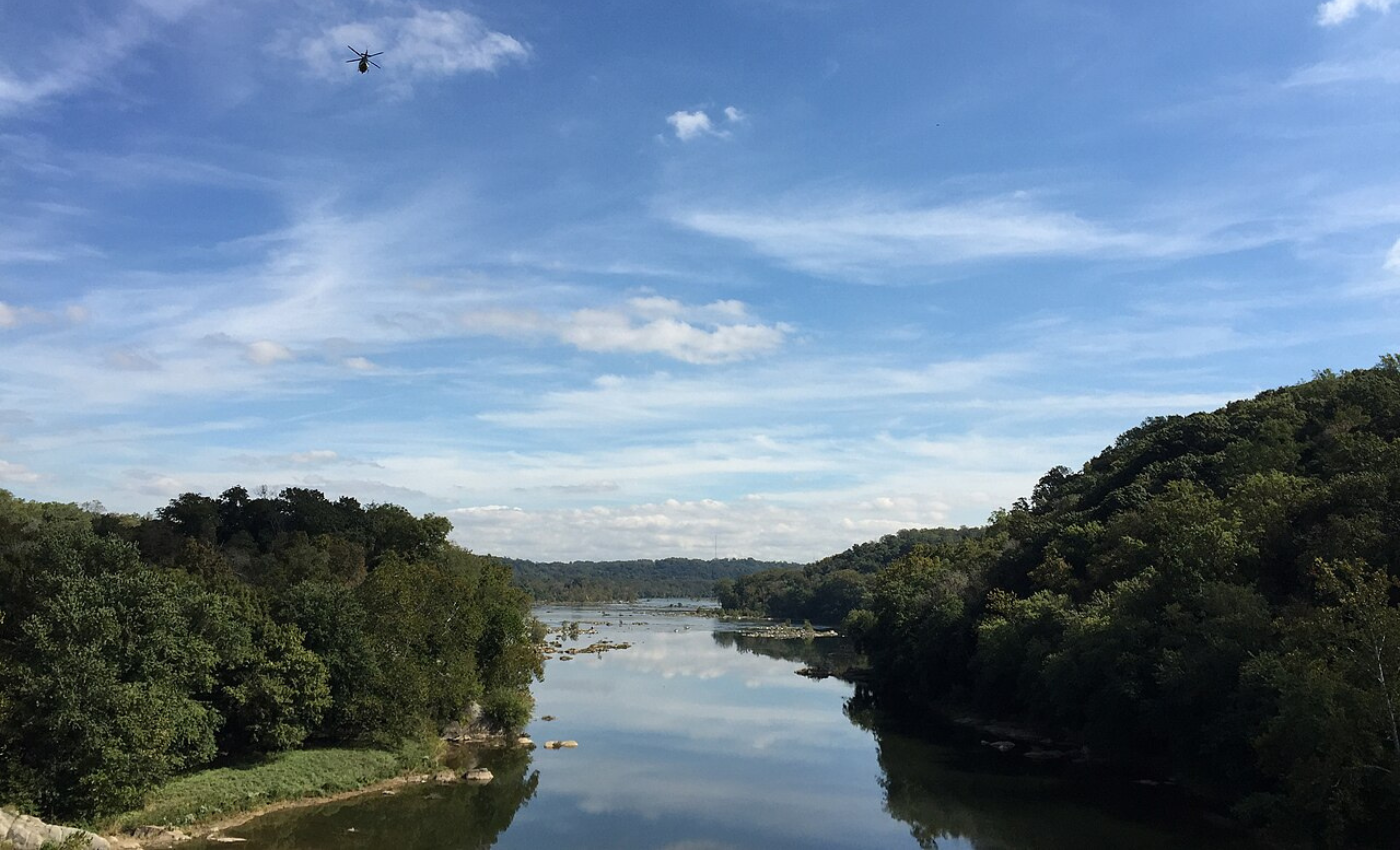
View from American legion bridge in Virginia. Photo credit: Famartin, CC BY-SA 4.0, via Wikimedia Commons
Originally known as the Cabin John Bridge, the American Legion Memorial Bridge opened in 1952 as a vital Potomac River crossing for the Capital Beltway connecting Fairfax County, Virginia, and Montgomery County, Maryland. The current name was adopted in 1969 to prevent confusion with the Union Arch Bridge crossing Cabin John
Creek in Maryland. The continuous girder road bridge initially featured eight lanes, but lacked a shoulder for stopped vehicles. In 1992, the bridge was expanded to 10 lanes. However, with the volume of traffic on the bridge, federal and state officials have proposed replacing the aging structure.
Beneath the bridge, both the Chesapeake and Ohio Canal National Historical Park and the extensive Potomac Heritage National Scenic Trail parallel the river, offering multiple recreational opportunities. The stretch of water below the American Legion Bridge is also part of the stretch of the Potomac River designated as a ‘scenic waterway’ under Maryland’s Scenic and Wild Rivers System. While just downstream from the bridge, Plummers Island has served as the headquarters for the Washington Biologists Field Club since 1901.
Woodrow Wilson Memorial Bridge, Maryland
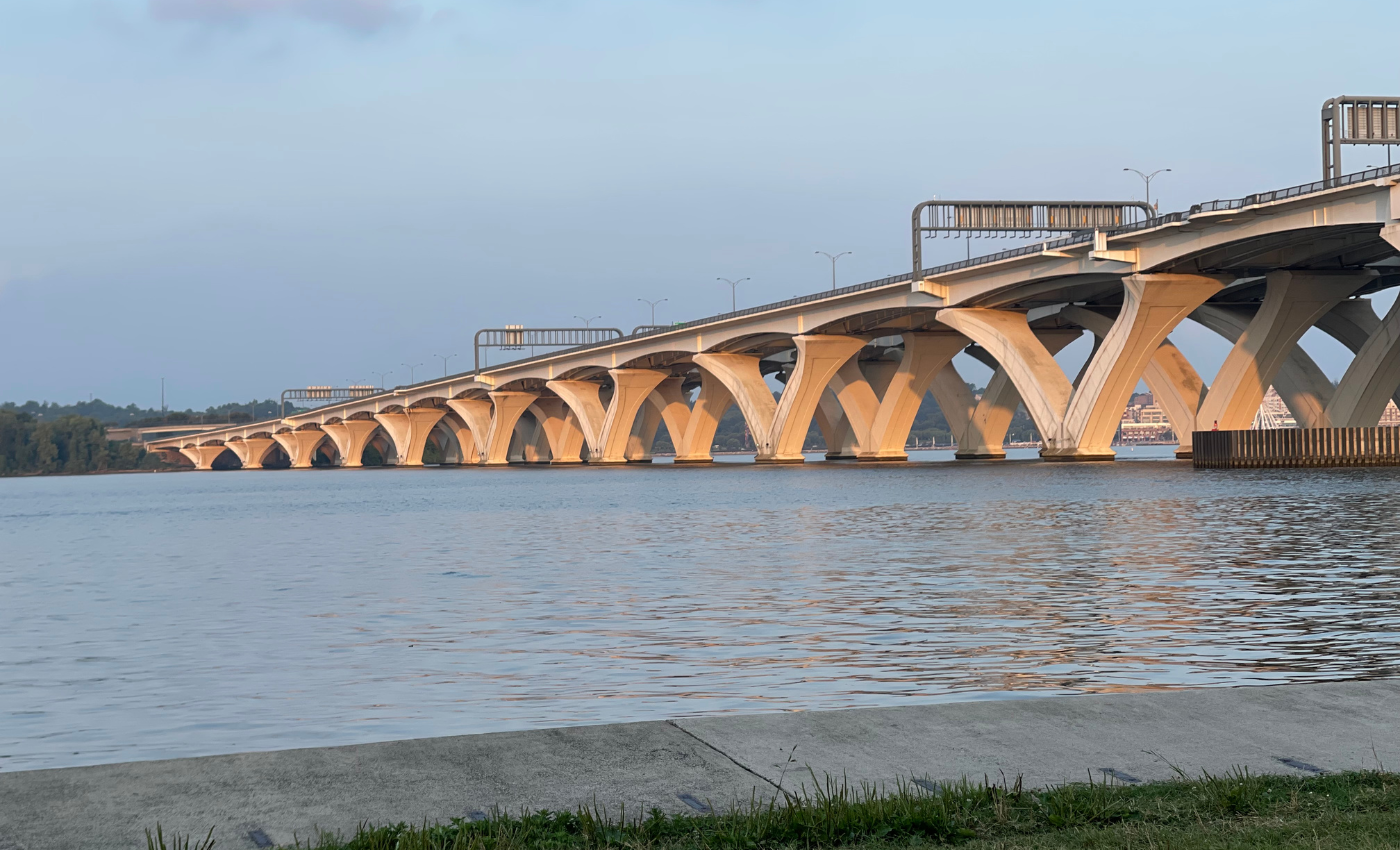
Woodrow wilson bridge between maryland and virginia
Named to honor America’s 28th president, Virginia native Woodrow Wilson, the eponymous Woodrow Wilson Memorial Bridge connects Alexandria, Virginia and Oxon Hill, Maryland. Built during the 1950s in the midst of America’s era of highway expansion, the drawbridge opened in 1961. By the 1980s, the bridge was carrying more than twice the vehicle capacity intended when the structure was built. Improvements were made to expand the drawbridge in 2007, with the opening of National Harbor on the Potomac River waterfront. Before these upgrades, drawbridges opened more than 250 times every year, but the extra clearance reduced annual openings to about 60.
Beyond the vehicle traffic, the 3.5-mile Woodrow Wilson Bridge Trail also crosses the northern span of the bridge, offering pedestrian and bike lanes and connections to other regional trails, including the Mount Vernon Trail (a great running trail!).
The Jones Point Lighthouse, part of Jones Point Park, is situated below the bridge.
The Jones Point Lighthouse, operated from 1856 to 1926, is one of the last riverine lighthouses in the country – and the only one remaining in Virginia. Plus, even from the ground at Jones Point Park, you get an amazing view of our beloved Potomac River!
Point of Rocks Bridge, Maryland
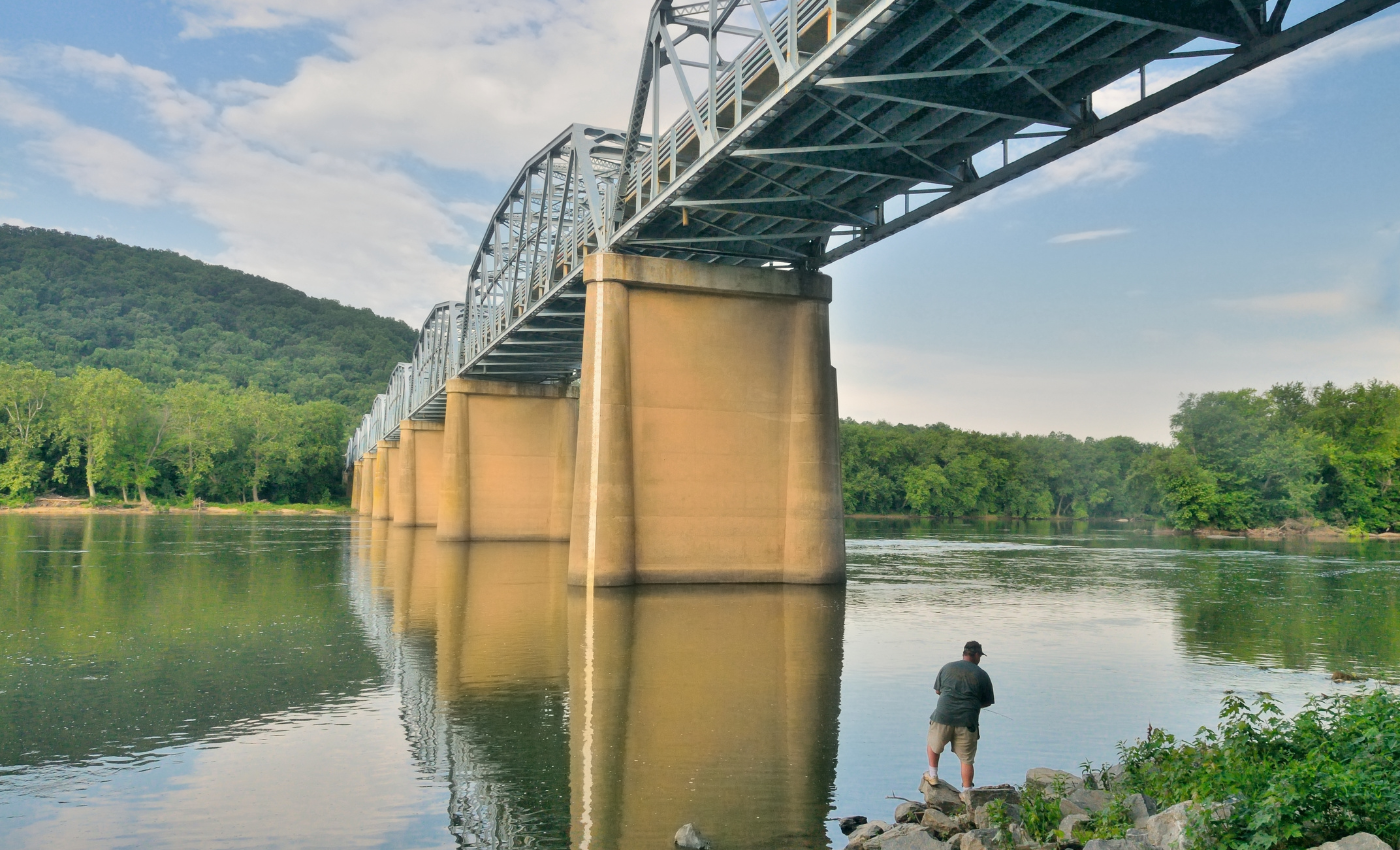
Point of rocks bridge in maryland
Named for an outcrop in Catoctin Mountain, Point of Rocks has been an important Potomac River crossing point for centuries. The first bridge was built in 1852 as a connection for the Baltimore and Ohio Railroad (B&O), but the wooden structure was destroyed during the Civil War, and replaced with an iron bridge in 1889. The reconstructed bridge was destroyed in a massive regional flood in 1936 – a natural disaster that also demolished river crossings in Hancock, Harpers Ferry and Shepherdstown.
The current camelback truss bridge was built in 1937 and today remains an important transportation corridor, delivering Route 15 across the river and connecting Frederick County, Maryland and Loudoun County, Virginia. The Chesapeake and Ohio Canal National Historical Park’s towpath runs beneath the bridge, and the Calico Rocks Campground is situated just a mile from the historic bridge. For day-trippers or overnight visitors, Point of Rocks is accessible by the MARC’s Brunswick-Washington Line.
Winchester and Potomac Railroad Bridge, West Virginia
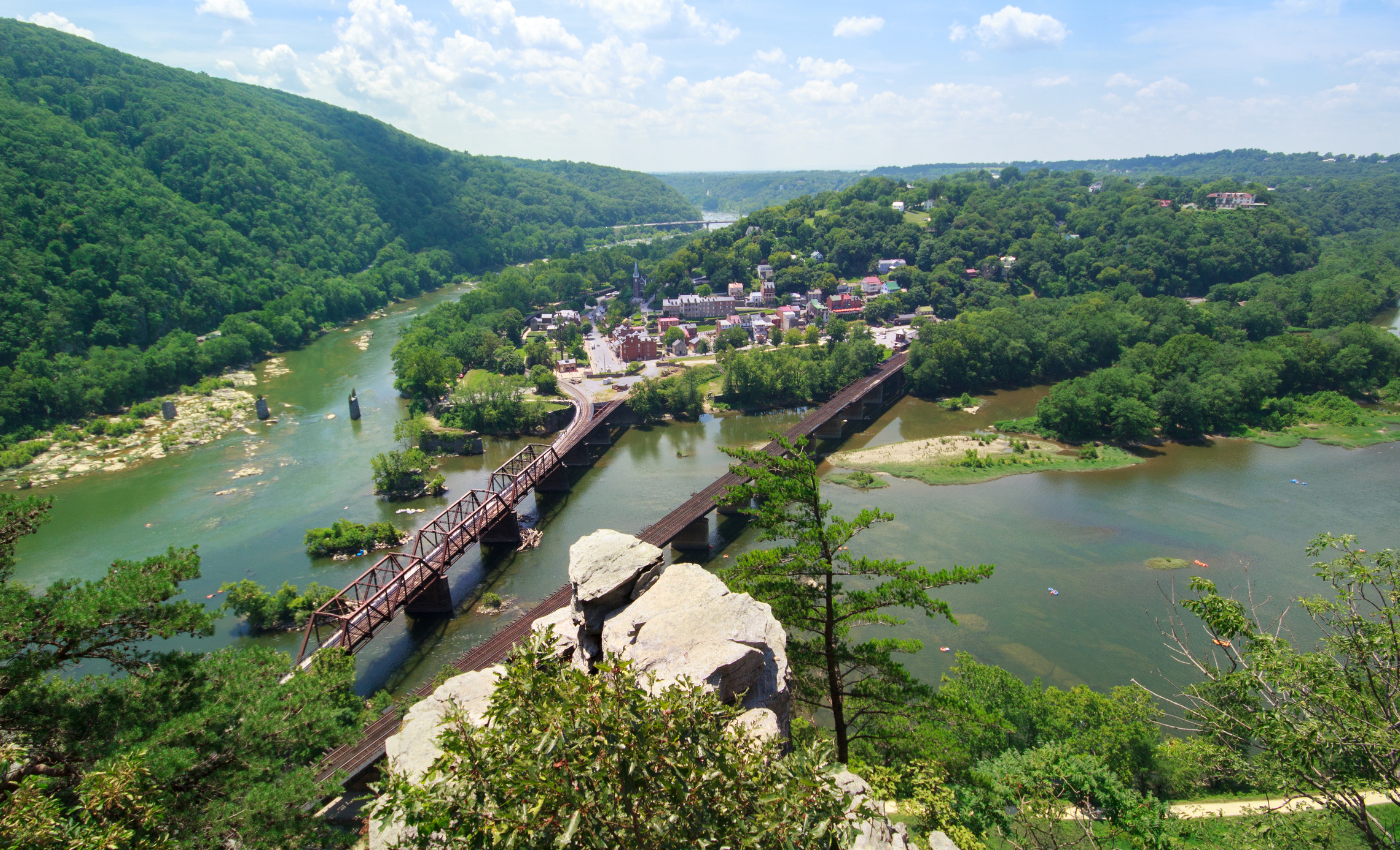
View of winchester and potomac railroad bridge in harpers ferry, west virginia
Spanning the Potomac River in Harpers Ferry, the Winchester and Potomac River Bridge was originally part of the historic Winchester and Potomac Railroad (W&P Railroad), a 32-mile line connecting Winchester and Harpers Ferry. The original covered wooden bridge over the Potomac River was built in 1837, and updated just two years later, when a Y-junction was added on Virginia’s side of the river to connect the line to the Baltimore and Ohio Railroad (B&O Railroad) in 1839. The span was upgraded again in 1851, with an iron truss replacing the original wooden structure.
These repairs didn’t last long. Situated at the confluence of the Potomac and Shenandoah Rivers, the town of Harpers Ferry was a vital transportation hub - and the town changed hands multiple times during the Civil War. During the conflict, the Winchester and Potomac Railroad Bridge was destroyed. The structure was rebuilt after the war using iron trusses placed on the original piers installed in 1837, and was completed in 1870. The Winchester and Potomac Railroad was purchased by the Baltimore and Ohio Railroad in 1902. Today, the bridge is part of the Harpers Ferry National Historical Park and is still used by trains on the Shenandoah Subdivision operated by CSX Transportation.
The structure also carries the Appalachian Trail over the Potomac River in Harpers Ferry, the town celebrated by thru-hikers at the midpoint of the 2,190 hiking route (even though technically, it’s a little less than halfway). Even if you’re a casual hiker (aka not doing the entire Appalachian Trail), you can check out this bridge and get some gorgeous views on single-day hikes!


What you need to know about the January 2026 Potomac Interceptor sewage spill and how you can demand accountability and action.