
“Fin” Favorites: Updates on Potomac dolphins you named!
/Remember Mac and Chessie? They’re still thriving in the Potomac River
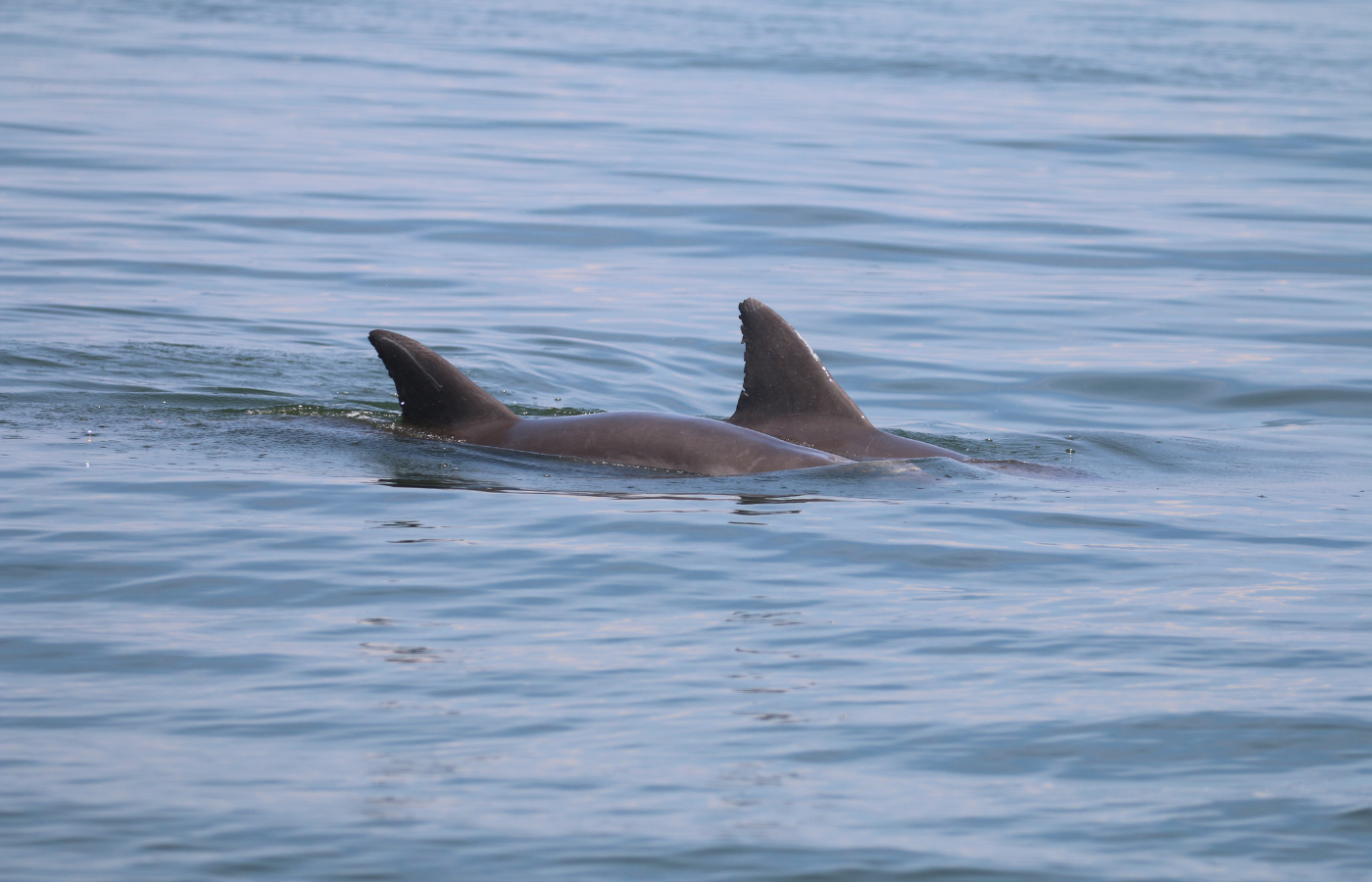
Mac and Hubert Horatio Humphrey swimming close together in 2025. Image taken by Verena Conkin under NOAA NMFS GA. 23782

Arielle Solomon has been a research assistant for the Potomac-Chesapeake Dolphin Project since graduating from Duke University, where she received her Bachelor of Science in Marine Science and Conservation. Solomon’s research interests lie in the nuances of the intersection of marine mammal behavior and climate change.
Did you know that the public helped name two dolphins that call the Potomac River their home? Back in 2019, you helped us name dolphins, Mac (for Potomac) and Chessie (for Chesapeake). And since then, Mac and Chessie have been making the most of their time in our local waterways.
Tamanend’s bottlenose dolphins (Tursiops erebennus) seasonally reside in the Potomac River from spring through fall. Since Georgetown University’s Dr. Janet Mann founded the Potomac-Chesapeake Dolphin Project in 2015, we have identified over 2,000 individual dolphins, many of whom have been seen so often that we have given them names and readily recognize them on the boat by their dorsal fin!
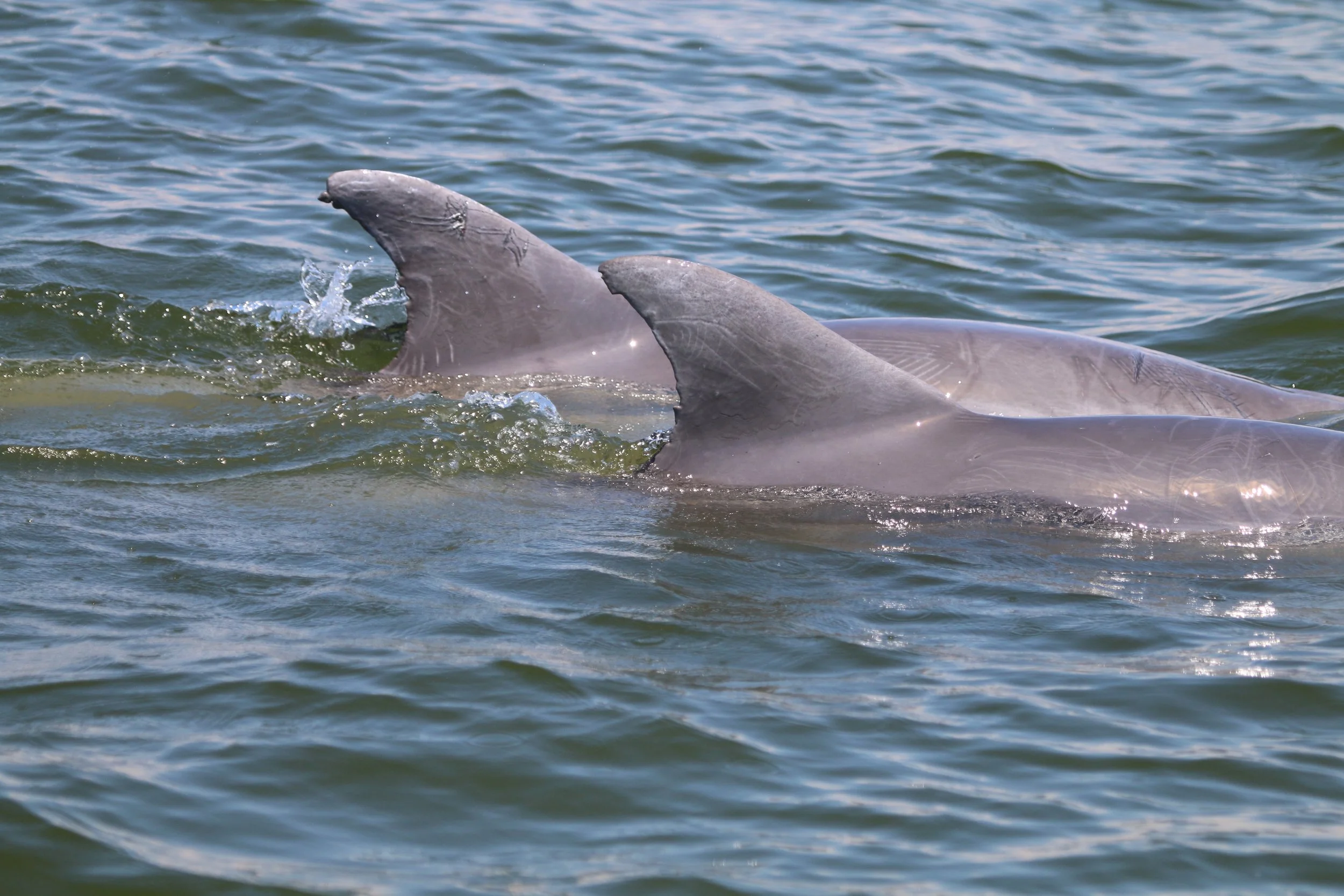
Chessie and Frederick Augustus Douglass swimming together in 2019. This was before Chessie developed that odd bump on his fin! Can you still recognize him from the notches on his fin? Photo taken By Ann-Marie Jacoby under NOAA NMFS GA 19403 and 23782
In our database, every dolphin is assigned a unique identification number, kind of like a social security number. Only when a dolphin has been seen for more than one year is it given an official name. So far, we have officially named 335 dolphins, meaning that at least 17% of the dolphins in our catalog return each year. Research led by our Associate Director, Dr. Ann-Marie Jacoby, shows that the dolphins we see likely belong to three different populations. One of these, which we call the "Chesapeake Bay cluster," appears to live year-round in the Chesapeake Bay and coastal waters of Virginia. These are the dolphins we see most often, and they spend a lot of time together close to shore. Most of our 335 named dolphins, including Mac and Chessie, are members of that Chesapeake Bay cluster.
So, how do we name them? In short, we name our dolphins after prominent American political, environmental, and historical figures, given their close proximity to D.C. After all, the Potomac is lovingly nicknamed “the nation’s river”! So far, we have only made one exception, when we teamed up with the Potomac Conservancy to ask community members to submit and vote on names for the two dolphins.
How do we identify individual dolphins?
A dolphin’s dorsal fin is like a fingerprint, unique in size and shape. When they are born, their dorsal fins are not very distinctive, but they accumulate scars and nicks to their dorsal fins from playful and aggressive interactions with each other, and human interactions, predominantly from boats or fishing gear. We try to photograph the dorsal fin of each dolphin we see while collecting data at the mouth of the Potomac. The more unique the fin, the easier it is for us to recognize it immediately on the boat. For less unique or distinctive fins, we check our photographs later and sleuth through our catalog of previously identified dolphins to find out who they are. To date, we have collected well over 100,000 photographs!
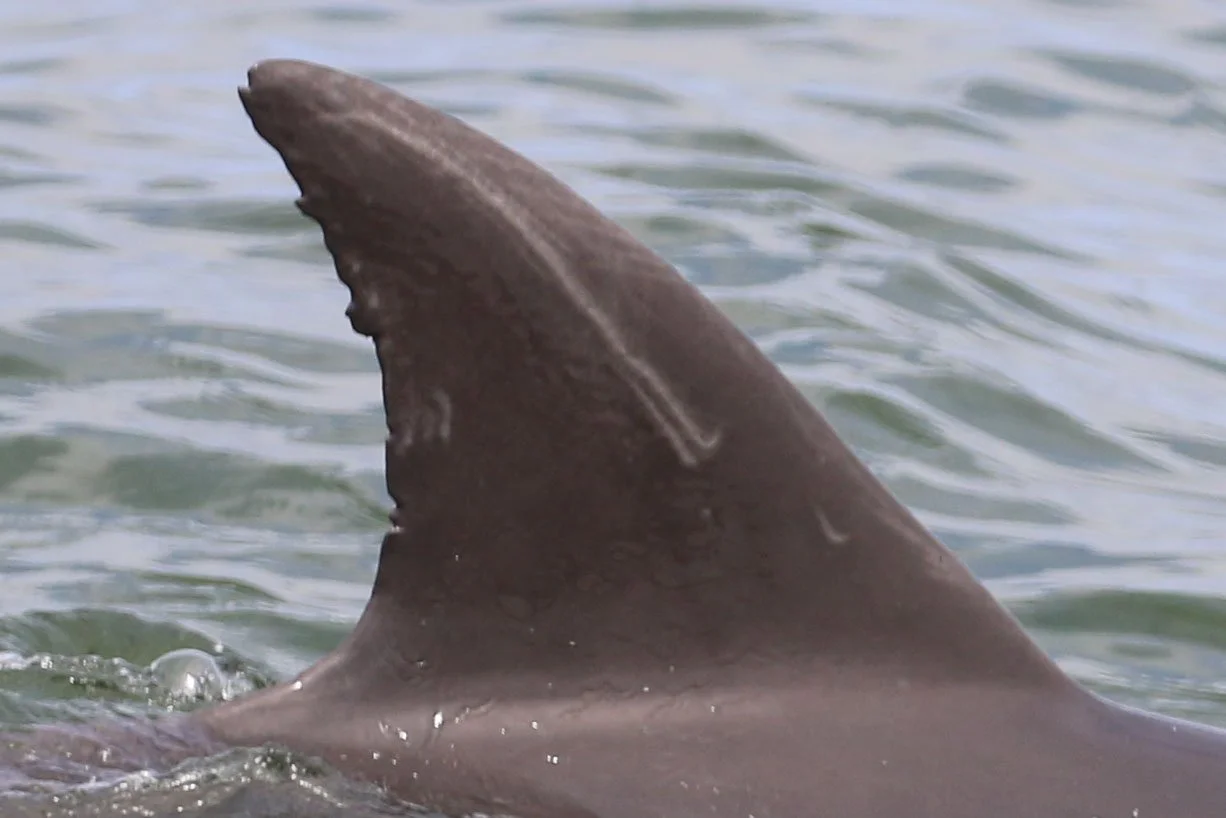
Mac’s fin has many notches and chips taken out of the trailing edge. The long scar is likely to be a toothrake from a conflict with another male. Photo taken by Verena Conkin under NOAA NMFS GA. 23782
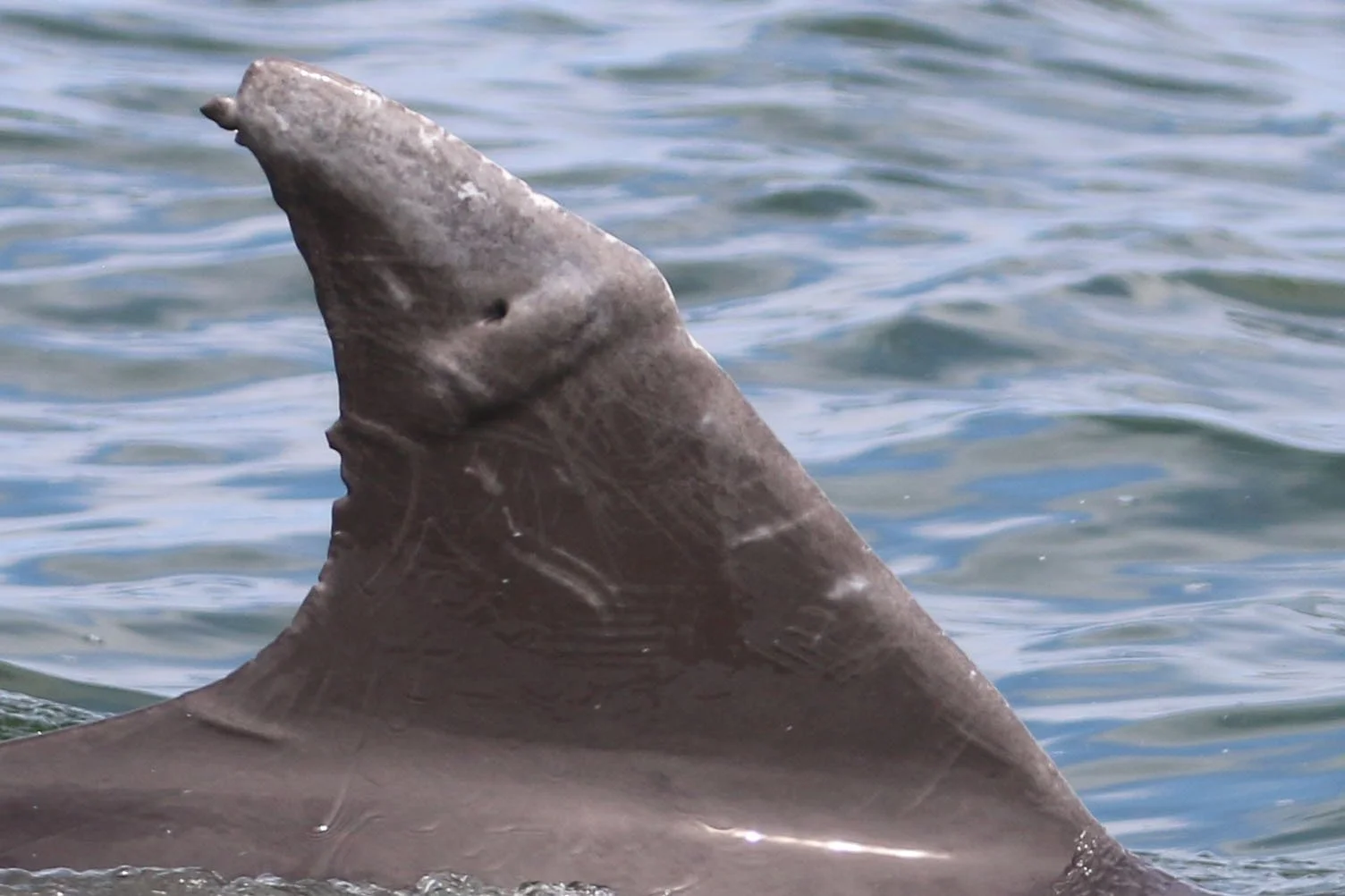
Chessie’s fin is very distinctive, especially with that odd bulge near the middle. This photo was taken in 2025 by Verena Conkin under NOAA NMFS GA. 23782
Mac is happy and healthy
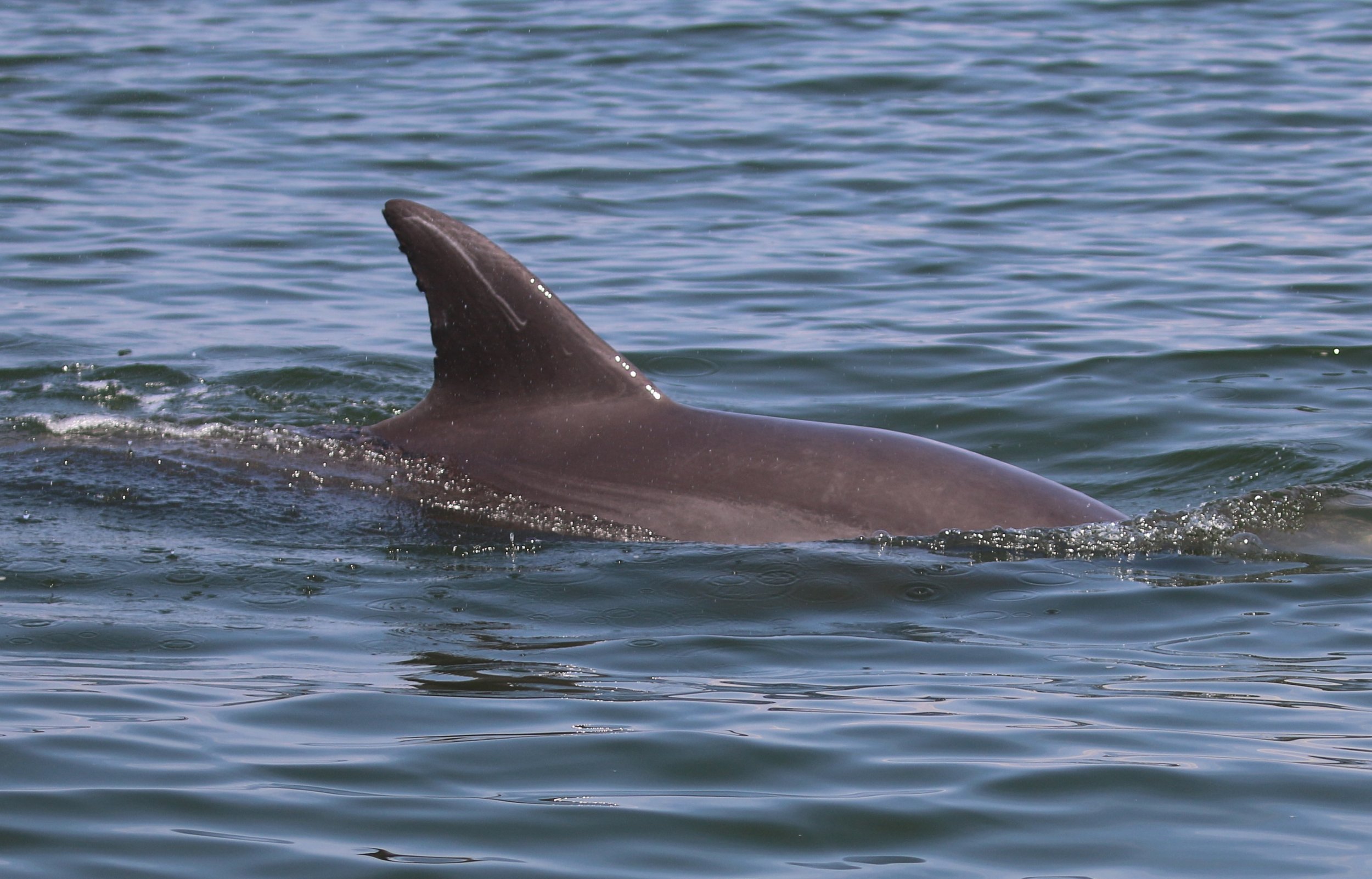
Mac swimming in the Potomac River in 2025. You might also notice the lighter Pigment along its side, right above the waterline. That is also unique to individuals and allows us to identify dolphins, especially if their dorsal fins change a lot from one year to the next. Photo taken by Verena Conkin under NOAA NMFS GA 23782.
Last seen in September 2025, we are out on the water looking for Mac right now. Mac is one of our unsexed adults in the Chesapeake Bay population, but we suspect he is male because he spends most of his time with other males; male dolphins are usually only seen associating with females during courtship and mating, and form their strongest bonds with other males. Mac is frequently seen swimming closely with dolphin Hubert Horatio Humphrey, another probable male. We have seen Hubert Humphrey and Mac synchronizing their breathing and petting one another, which are signs of bonding. He has also been seen with Ulysses S. Grant, Adlai Ewing Stevenson, and Margaretta “Happy” Rockefeller and her calf!
Last field season, we noticed that many of our dolphins were looking plump, and Mac was no exception! We believe this means that the dolphins have had an abundance of fish to feed on. However, we do not know how the recent Potomac River sewage spill will affect their prey and if they will remain as well fed in the coming months.
Chessie is one of the boys
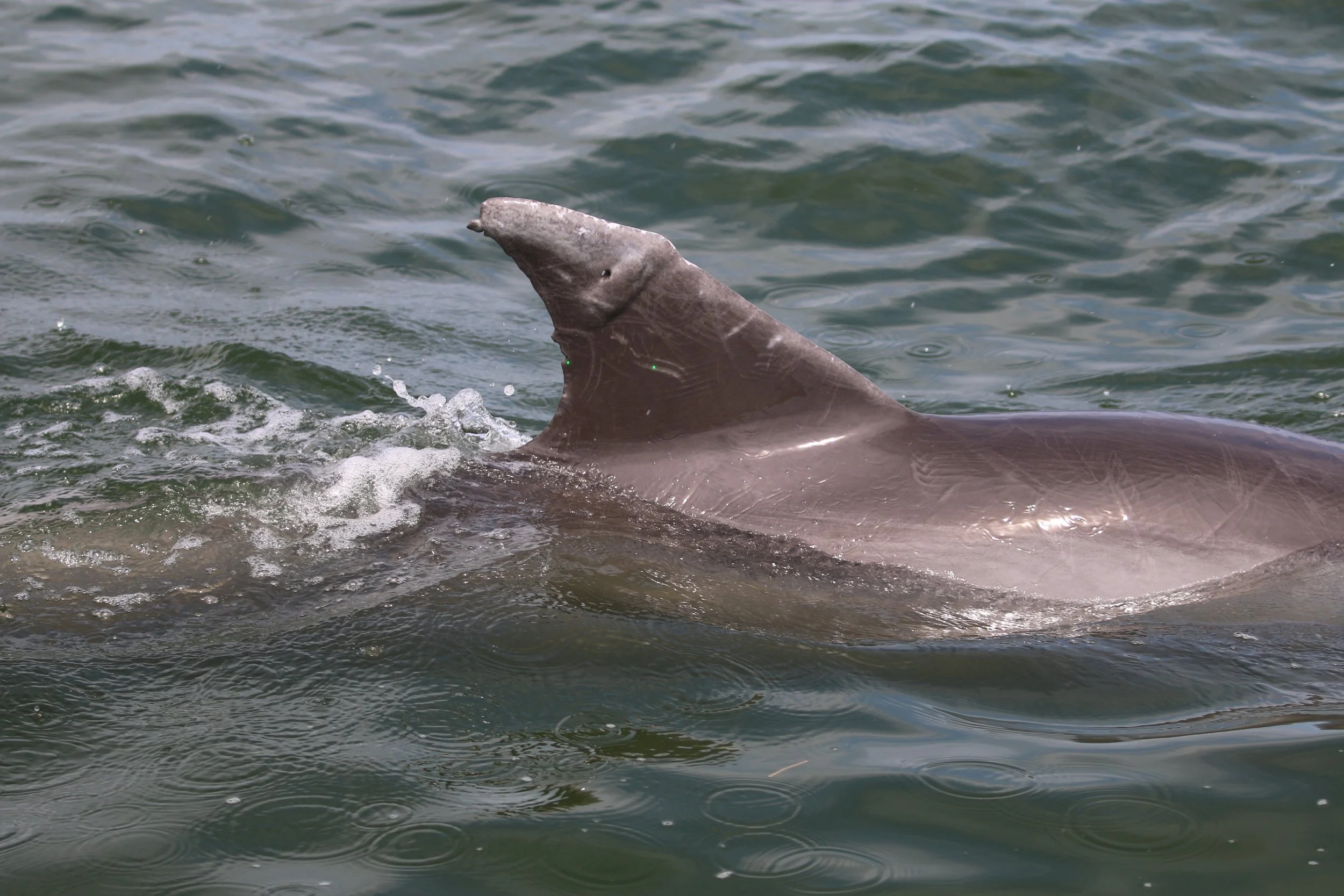
Chessie in the Potomac River on August 11, 2025. Photo taken by Verena Conkin under NOAA NMFS GA 23782
Chessie is also one of our Chesapeake Bay animals and was seen last in 2025. We are confident that Chessie is an adult male based on his size and behavior. We have a strict protocol for determining a dolphin’s sex and age. If they have a calf, it is easy to know they’re adult females. For males, it is a bit trickier. We use a combination of behaviors (e.g., mounting behavior is a good cue!), associations (since males tend to hang out together), and physical attributes (males are larger than females) as evidence.
Chessie is frequently seen associating with Frederick Augustus Douglass, who is also likely a male. But Chessie has also been observed hanging out with Margaret Tipper Gore and Madeleine Albright and their calves. This fascinates us at the PCDP, since in many other bottlenose dolphin populations around the world, males rarely associate with females with calves! One of our research projects is currently looking into this observation and what it may mean.
Just like Mac, Chessie is a big adult and looked healthy in 2025. PhD candidate Verena Conkin, who is leading our 2026 field season, calls Chessie a sea monster because he is so big!
How you can monitor and support Mac, Chessie, and other Potomac-Chesapeake Dolphins
While we monitor the dolphins every day, weather permitting, from spring through fall, we definitely do not catch every dolphin sighting. Citizen sightings help us to monitor dolphin presence in the Potomac River. Here are ways you can contribute to the Potomac-Chesapeake Dolphin Project and monitor the dolphins in our ecosystem.
📢 BECOME A STEWARD: Advocating for improved, climate-friendly infrastructure to mitigate polluted runoff and reducing waste are two ways you can make a difference.
🧤 GET INVOLVED: Work with the Potomac Conservancy and other local environmental groups that are taking direct action to reduce water pollution.
➡️ KEEP YOUR DISTANCE: If you recreate on the Potomac, maintain a safe distance of at least 50 yards from dolphins to reduce stress and avoid accidental injury
📲 REPORT SIGHTINGS: Early identification of disease is important. If you see a dead dolphin on the Potomac, report it to the Virginia stranding hotline at (757) 385-7575 or the Maryland stranding hotline at 800-628-9944. You can also report sightings of live dolphins to the Potomac-Chesapeake Dolphin Project and through the Chesapeake Bay Dolphin Watch app.
💙 FUND THE RESEARCH: This work is costly, and donations help cover the expenses associated with data collection. To donate to the Potomac-Chesapeake Dolphin Project, please visit the donation page through Georgetown University


Curious about the numerous butterflies and moths fluttering around the Potomac River region? Find out how caterpillars spend their fall months, before emerging into butterflies and moths in the warmer months!